👋 Hey there, I’m Lenny. Each week, I answer reader questions about building product, driving growth, and accelerating your career. For more: Lenny’s Podcast | Lennybot | How I AI | My favorite AI/PM courses, public speaking course, and interview prep copilot
P.S. Get a full free year of Lovable, Manus, Replit, Gamma, n8n, Canva, ElevenLabs, Amp, Factory, Devin, Bolt, Wispr Flow, Linear, PostHog, Framer, Railway, Granola, Warp, Perplexity, Magic Patterns, Mobbin, ChatPRD, and Stripe Atlas by becoming an Insider subscriber. Yes, this is for real.
Welcome to our biannual State of the Product Job Market—our fourth and, very surprisingly, the most optimistic. In spite of the headlines about layoffs and AI taking jobs, we’re actually seeing a lot of promising signs in tech hiring, and some interesting new trends:
PM openings are at the highest levels we’ve seen in over three years
AI hasn’t slowed the demand for software engineers (at least not yet)
AI roles in general are absolutely exploding
Design roles have plateaued
The Bay Area is increasing in importance
Remote work opportunities continue to decline
Despite ongoing layoffs, the overall number of tech jobs continues to grow
While these numbers are promising, I know a lot of people are having a hard time finding a job right now. And more openings doesn’t automatically mean people are finding jobs more quickly. For anyone in that situation, first of all, I’m sorry. Second, I’m working on ways to help. Until then, check out the end of this post for a bunch of resources I’ve collected that’ll improve your odds of landing a gig.
Let’s get into it.
This analysis is based on data from TrueUp, one of my favorite collaborators and sources of data. They track job openings at tech companies and top startups around the world (over 9,000 companies) and make it easy to browse open gigs. Their data looks at roles at tech companies—the most sought-after and lucrative jobs. (It doesn’t include roles at non-tech companies and consulting agencies.)
1. PM openings are at the highest levels we’ve seen in over 3 years
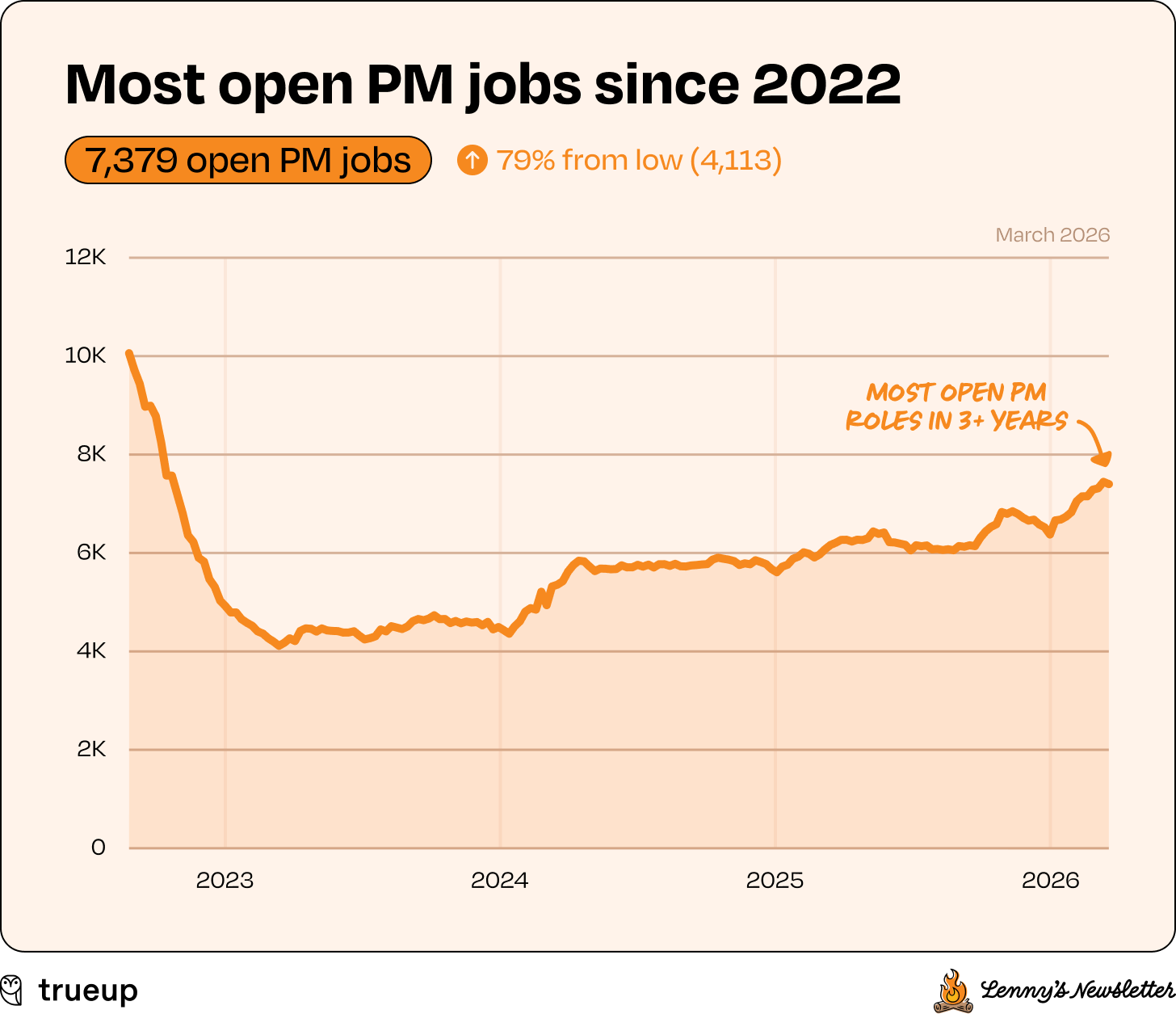
There are over 7,300 open PM roles at tech companies globally, and trending up. This is 75% above the low we saw in early 2023, and already up nearly 20% since the start of this year. Today we have the most open PM roles we’ve seen since 2022. (You can see all of these open roles here.)
The same trend is true for engineering roles . . .
2. AI hasn’t slowed the demand for software engineers (at least not yet)
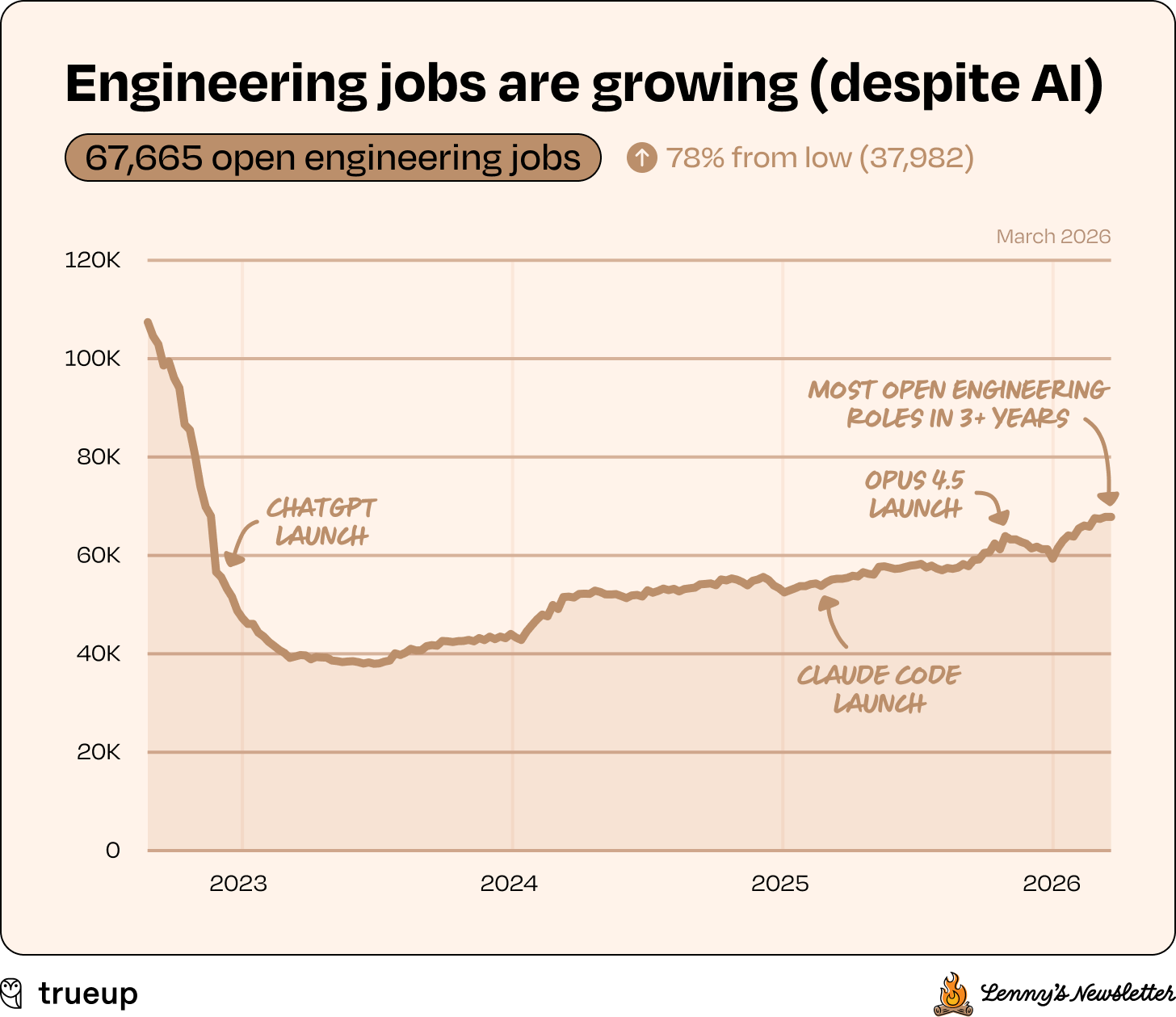
There are over 67,000 (!!!) eng openings at tech companies globally right now, with 26,000 just in the U.S. We don’t know if there would have been more open roles if not for AI or if AI is actually leading to more open roles, but since the start of this year, the increase in open eng roles is accelerating even more.
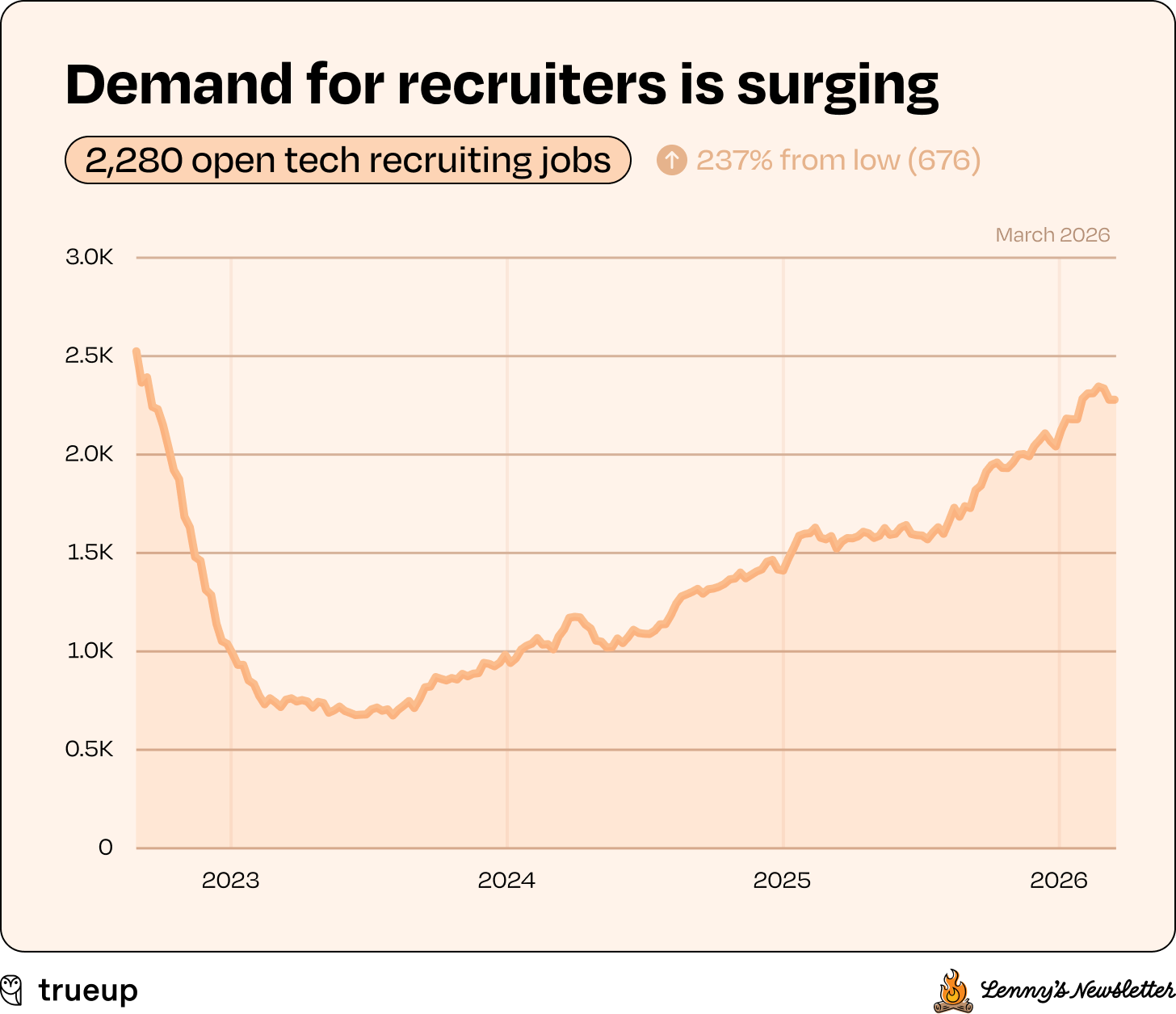
If you’re skeptical that this growth is real and likely to be sustained, we’re also seeing a surge in demand for tech recruiters. The number of open recruiter roles is almost back to 2022 peak levels. This role got hit the hardest post-Covid, and also recovered the quickest. By definition, recruiting headcount expands and contracts with hiring demand, so it’s likely a leading indication that we’re tracking toward sustained highs in hiring demand in tech.
3. AI jobs in general are absolutely exploding
AI roles were already growing fast in our last update mid-last year, but they are now hockey-sticking:
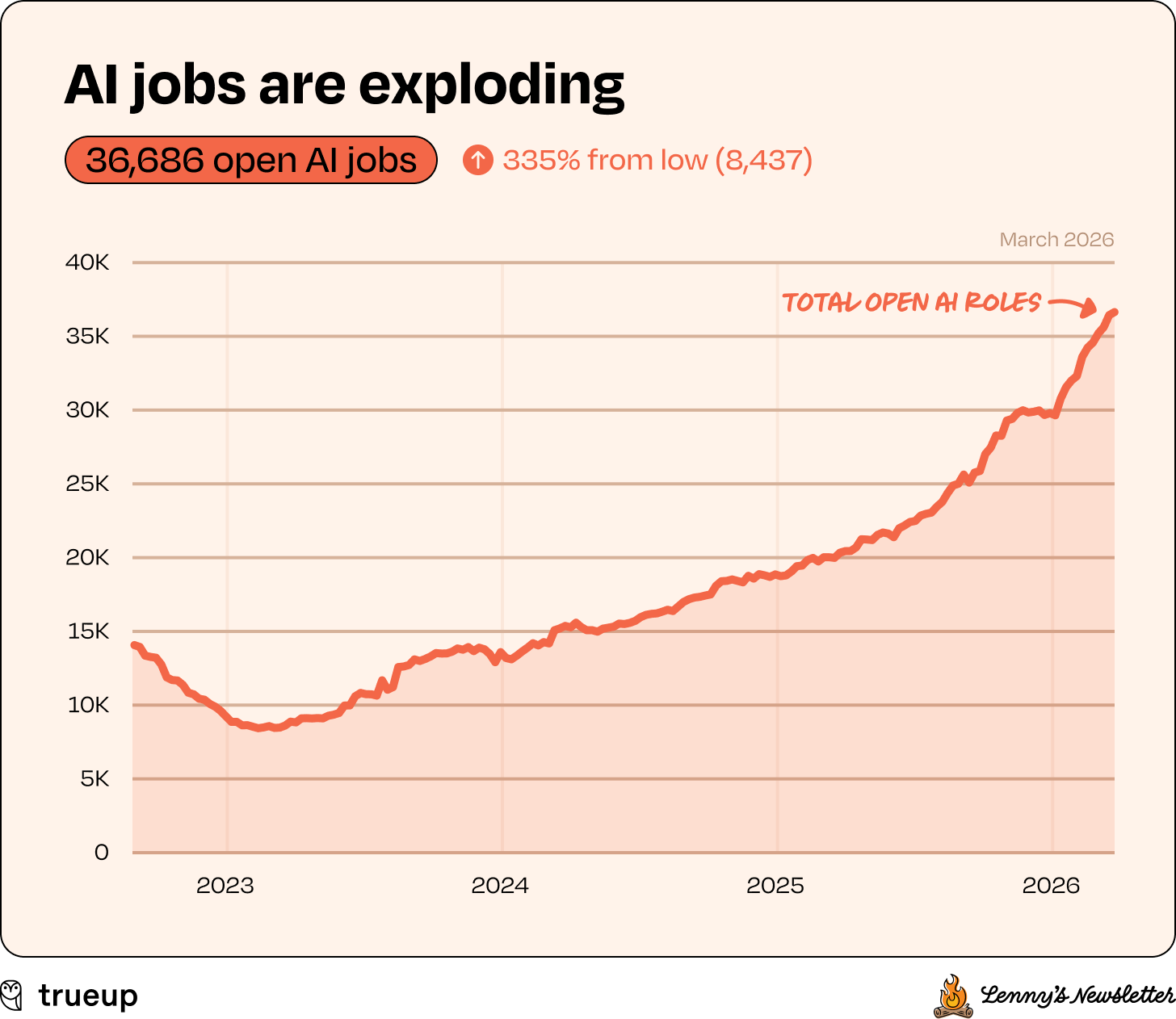
“AI roles” includes (1) all open roles at AI-driven companies, like OpenAI, Anthropic, Cursor, and Lovable, and (2) AI-specific roles at non-AI companies, like an AI PM at Figma. Browse them here.
Demand for AI engineers and AI PMs is similarly exploding.
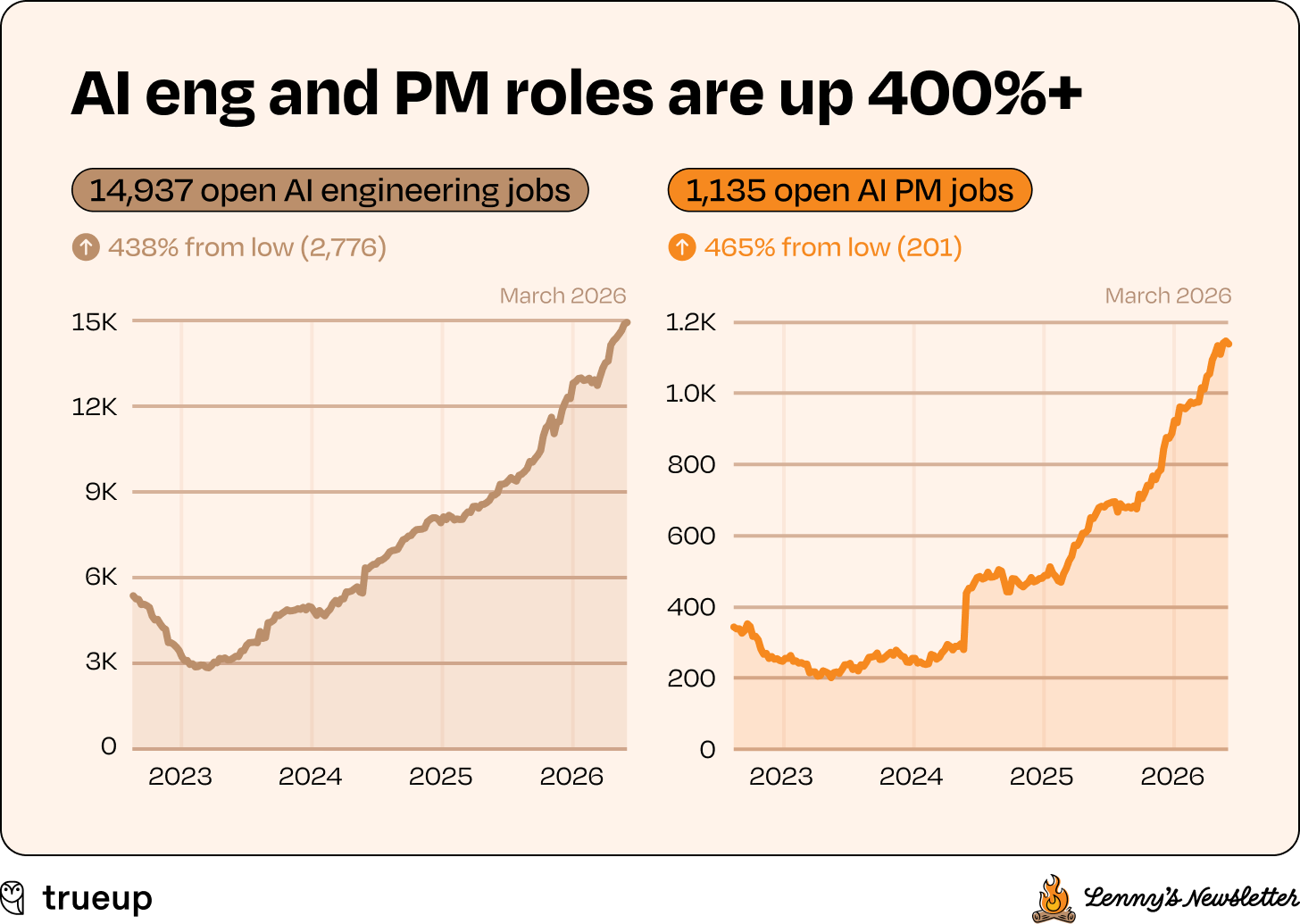
Whether this is simply the number of AI companies being created or the headcount at top AI companies growing, it’s a good time to be in AI.
4. Design roles have plateaued
Unlike PM and engineering, open design jobs have been relatively flat since early 2023, and there are also fewer of these roles than PMs and engineers in absolute terms (about 5,700 globally).
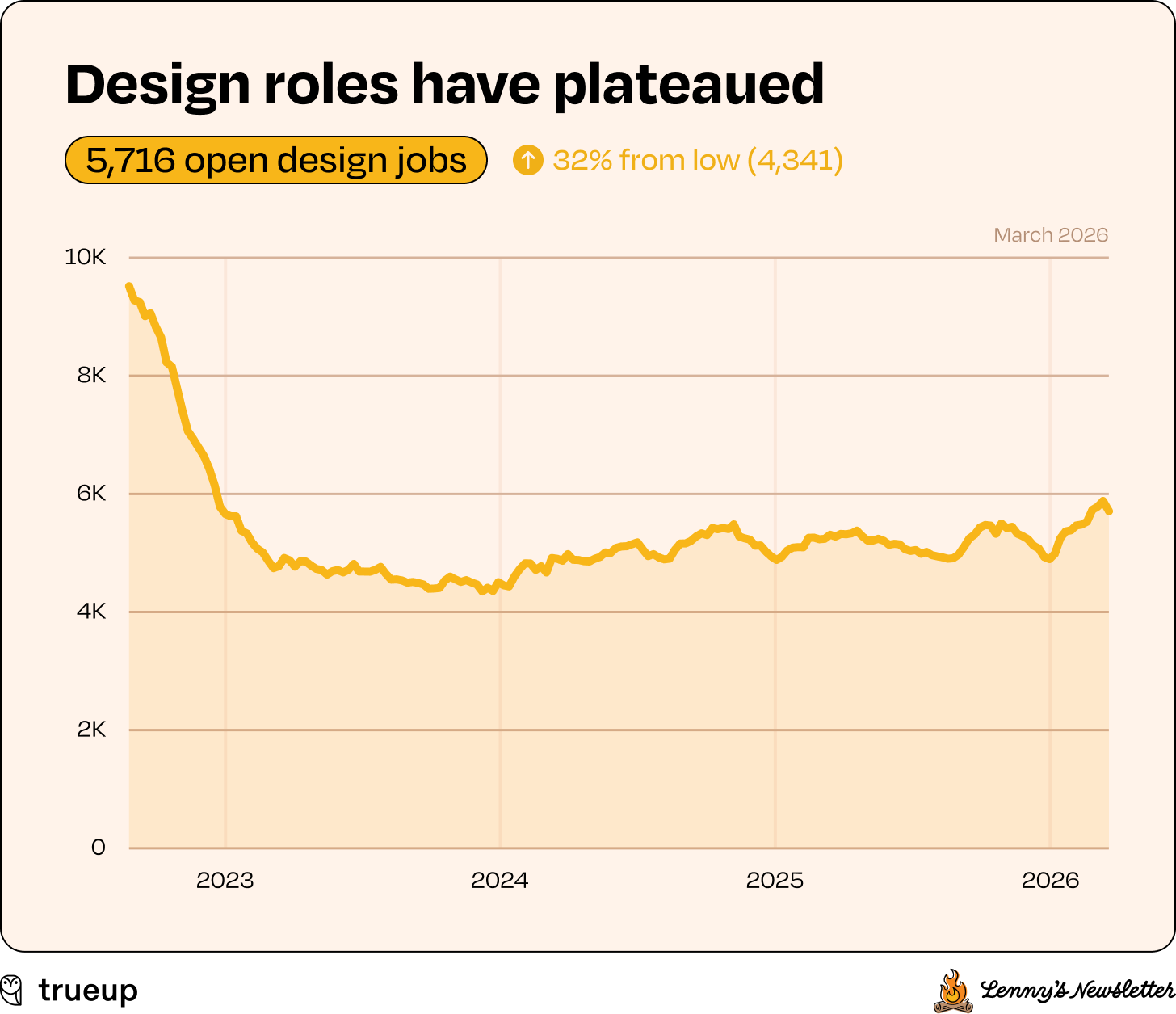
I don’t know exactly what’s going on here, but it does feel AI-related. Unlike PM and eng, which started growing in 2024 (two years post-ChatGPT), design didn’t. If I had to venture a theory, I’d say that because AI is allowing engineers to move so quickly, there’s less opportunity—and less desire—to involve the traditional design process. A recent tweet commented on this same trend. That said, you’d think design would become a differentiator as more products compete for attention. Something to think about for your company! We’ll keep watching this trend and AI’s impact on org design more generally.
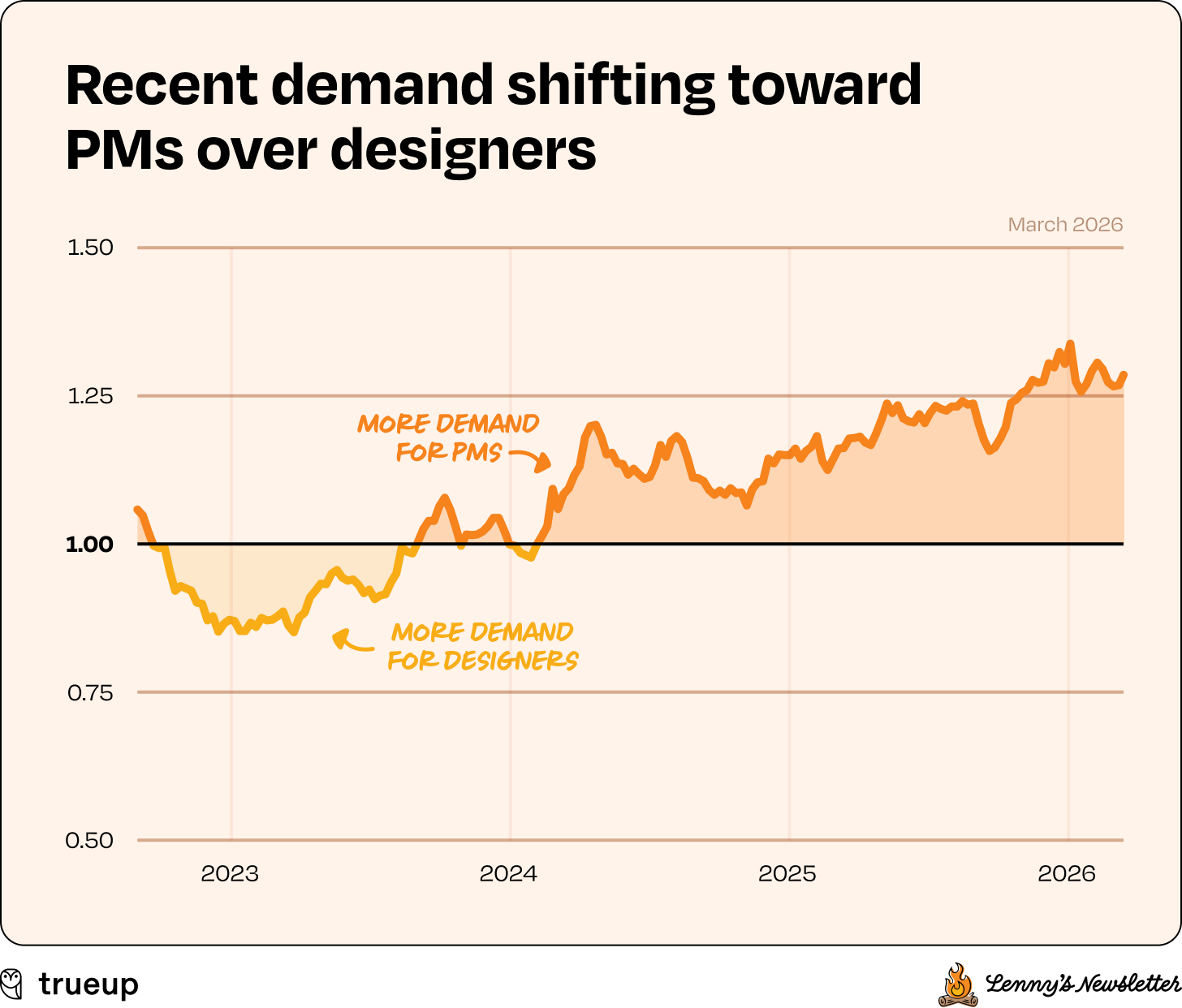
One interesting observation we made when we went a level deeper: the ratio of demand for PMs vs. designers has flipped. In mid-2023, we went from more open designer roles to more open PM roles. And ever since, PM demand has been pulling away (currently 1.27x). This will be another trend to monitor, in terms of how AI is reshaping org design.
5. The Bay Area continues increasing in importance
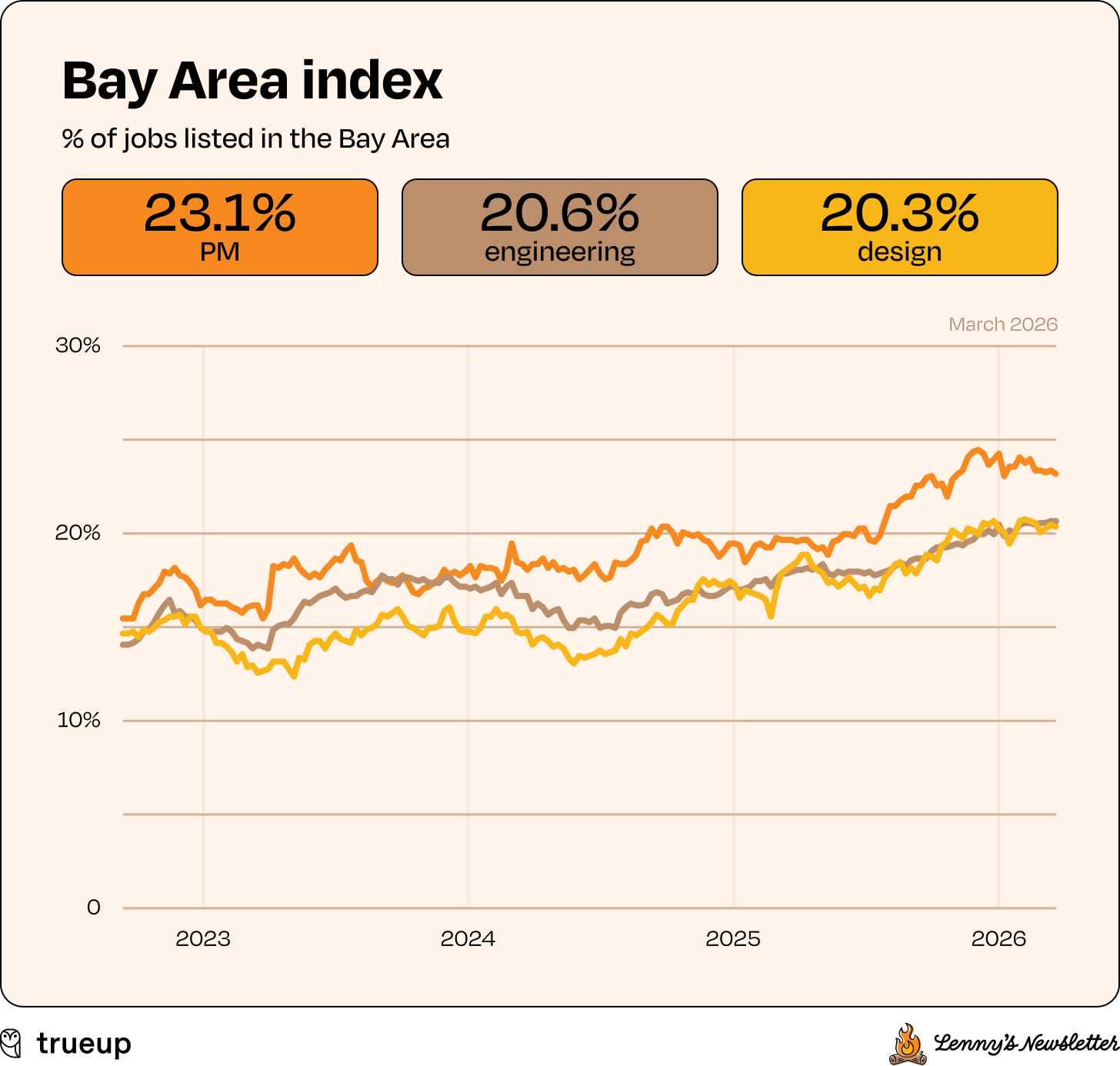
The Bay Area has long had the highest share of tech roles, but that share is still growing. Over 20% of all eng and designer roles are now in the Bay Area, and over 23% (!!!) of open PM roles are too (up 50% since 2022!). And all three are still going up.
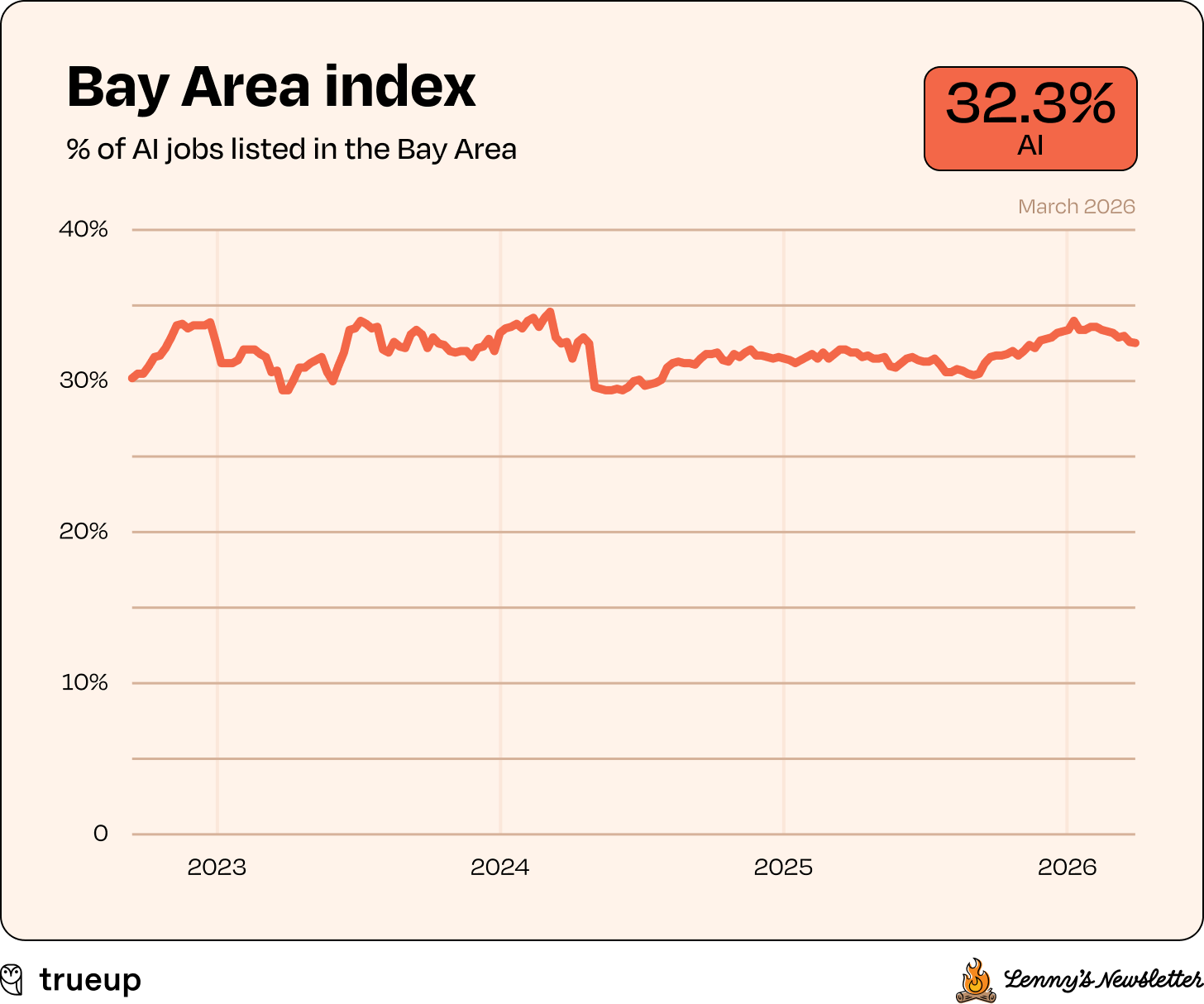
A whopping third of open AI roles are based in the Bay Area, but, interestingly, this number has stayed relatively flat in the past few years. That tells me that the Bay Area unquestionably continues to be the center of AI (the next city is New York, with 10.2%), but at the same time, AI roles outside the Bay Area continue to grow at the same rate.
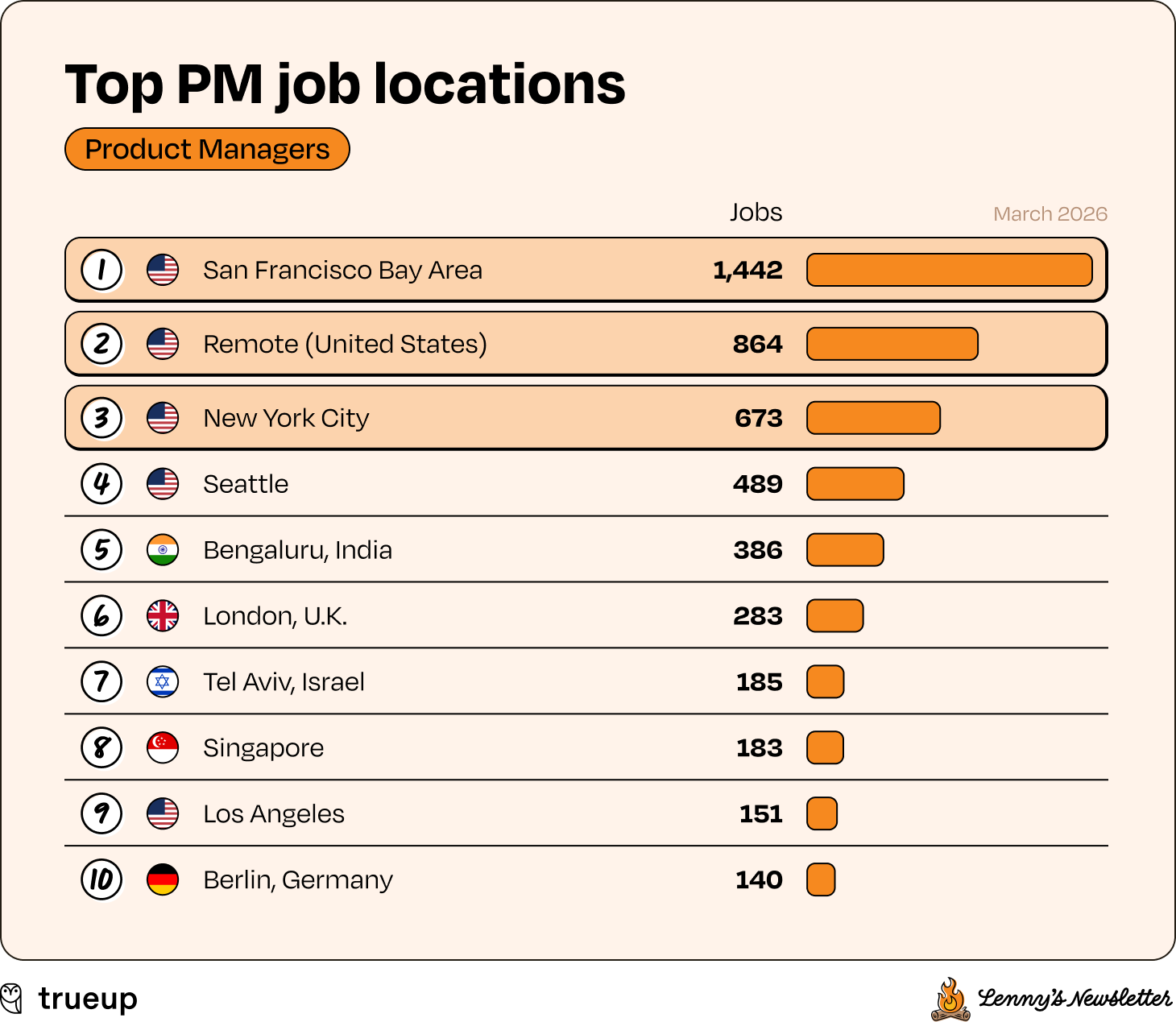
One more interesting data point: NYC has established itself as the #2 tech jobs location in the world, despite not being the headquarters of any of the leading tech companies. Bengaluru (formerly Bangalore), London, Tel Aviv, and Singapore continue to be the top international hubs for tech.