


👋 Hello and welcome to this week’s edition of ✨ Community Wisdom ✨ a subscriber-only email delivered every Saturday, highlighting the most helpful conversations and events happening in our subscriber-only Slack community.

A big thank-you to this month’s community sponsor, Strella. Strella is an AI-powered qualitative research platform that allows teams to run, analyze, and share customer interviews at scale without sacrificing depth. Usability testing, concept validation, discovery research, and more, Strella delivers insights fast and makes them accessible right where you work, including Claude, ChatGPT, and Figma, so your research keeps working long after the initial readout.
🏕️ Lenny and Friends Summit returns this fall

The Lenny and Friends Summit returns on September 10 in San Francisco. This will be the greatest assembling of product leaders in history.
We’re keeping it intentionally small (about 1,000 people)—every attendee will be handpicked—and along with in-depth talks from the world’s top operators, we’ll have interactive workshops, tons of opportunities to get to know other attendees, and a few fun surprises.
Here’s the initial lineup of speakers (with more to be announced soon):
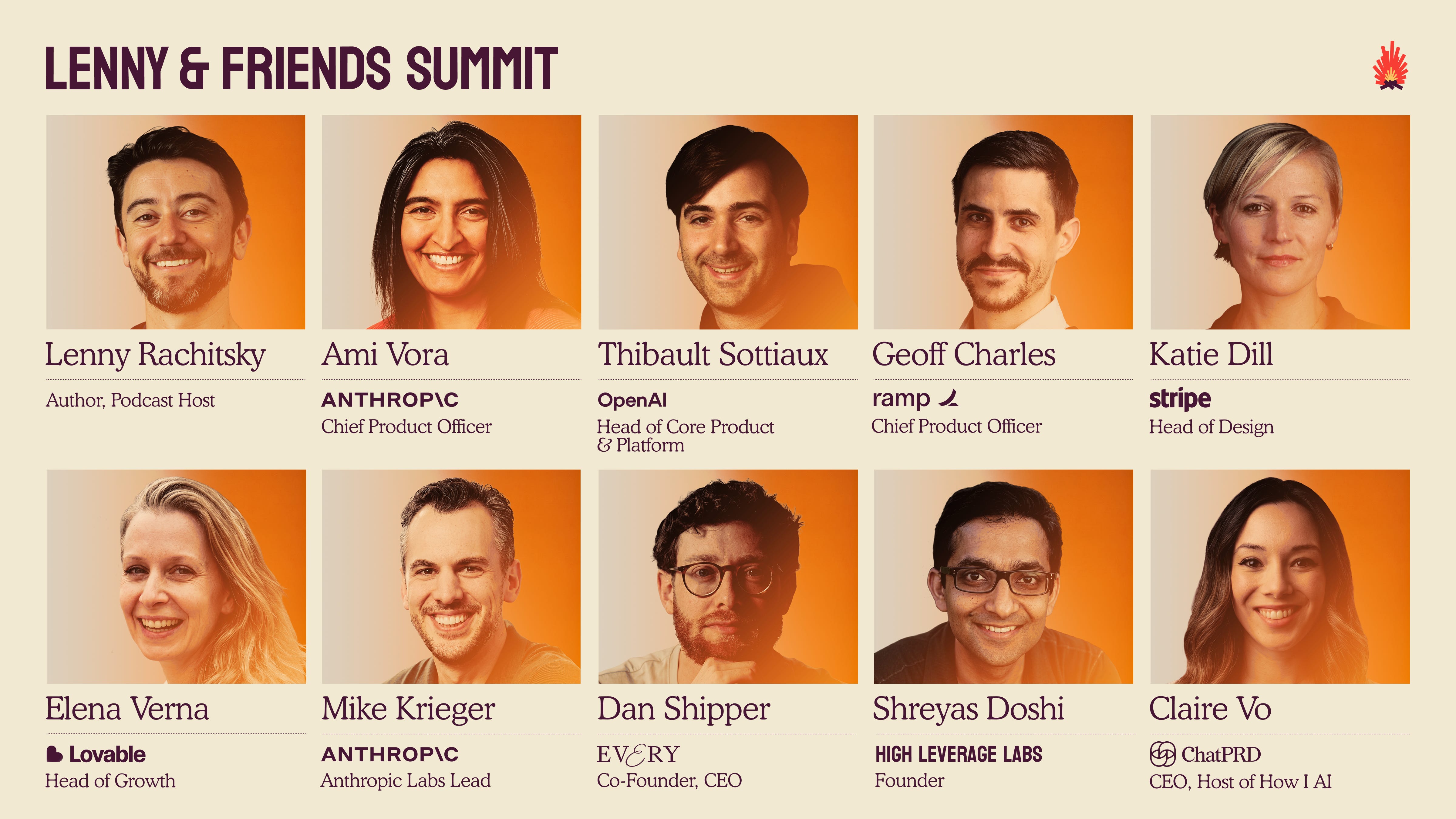
Given that we’re anticipating lots of interest and the venue has limited capacity, we’re asking people to apply to attend. Paid newsletter subscribers will get priority access.
P.S. We’ve expanded capacity at the venue, so if you’ve received an email saying there wasn’t a spot for you, reply to this email and we’ll take another look at your application.
📆 Upcoming community meetups
Click the city name to RSVP:
Amsterdam. June 17th. Thanks to @Adriana Mosnoi, @Ruslan Doronichev & @Luke Rynne Cullen!
Asheville. June 17th. Thanks to @Nathan Phillips!
Atlanta. June 25th. Thanks to @Ravish C.!
Austin. June 25th. Thanks to @Mark Vandegrift & @Andy Keil - Austin!
Bellevue. June 23rd. Thanks to @Aman Goyal!
Boston. June 17th. Thanks to @David Jorjani!
Chicago. June 17th. Thanks to @Jason Siegel!
Boulder. June 25th. Thanks to @Dave Carlyle!
Hong Kong. June 17th. Thanks to @Manny Reimi!
Lisbon. June 22nd. Thanks to @Gabriela Naumnik & @Nina Un!
Munich. June 16th. Thanks to @Lukas Gerhardt!
Philadelphia. June 17th. Thanks to @Keriann Sabatini & @Doug Clark!
San Francisco. June 25th. Thanks to @Tarek Sadi!
Santa Barbara. June 15th. Thanks to @Joni Hoadley, @Cody Landstrom, & @Oliver Barton!
Shenzhen Afternoon Meetup. June 18th. Thanks to @Ivan Xu!
Toronto. June 24th. Thanks to @Jessie Wang!
Valencia. June 26th. Thanks to @Paul Boudet!
Vienna. June 16th. Thanks to @Serge Versille!
Warsaw. June 16th. Thanks to @Matt Swulinski!
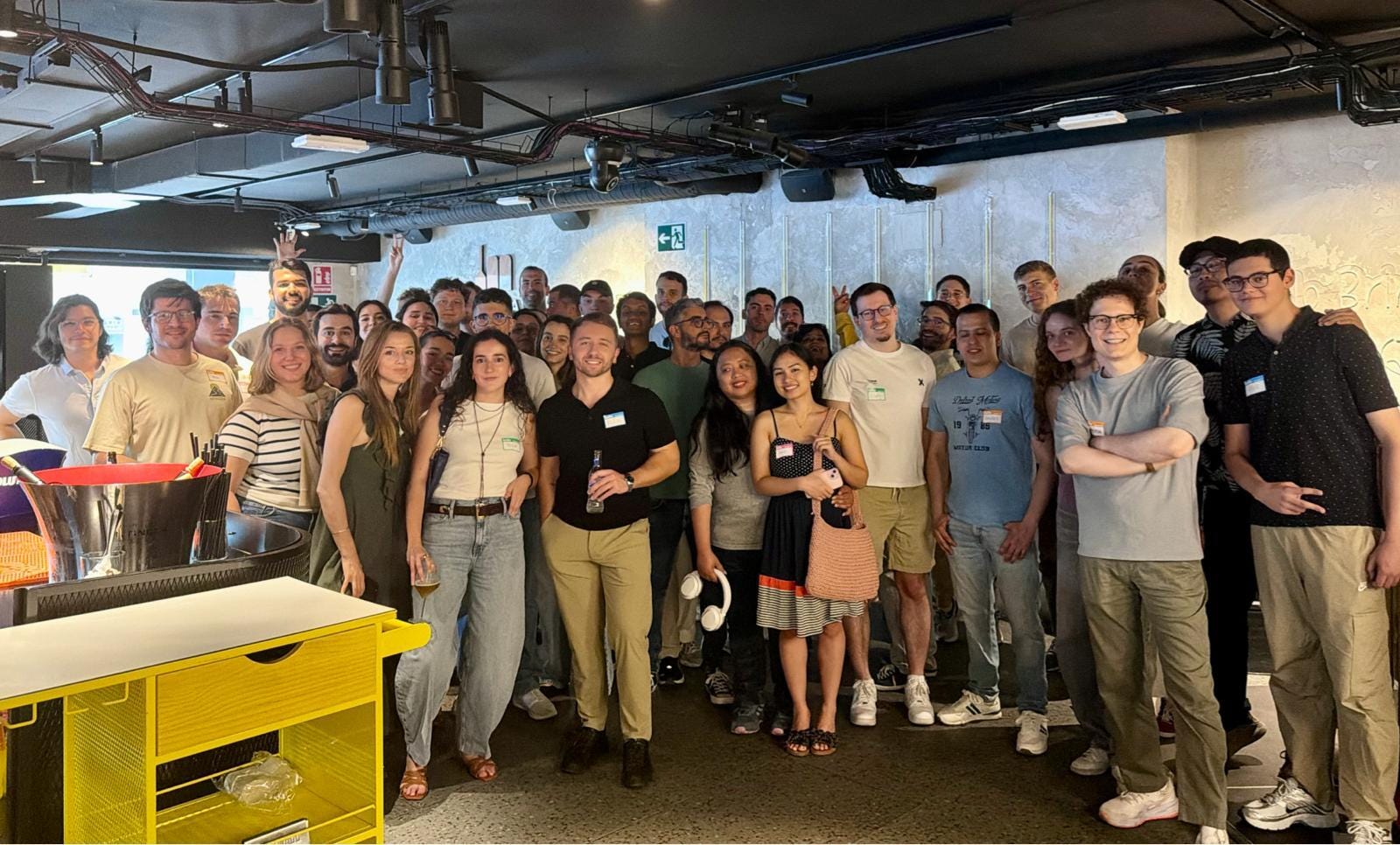
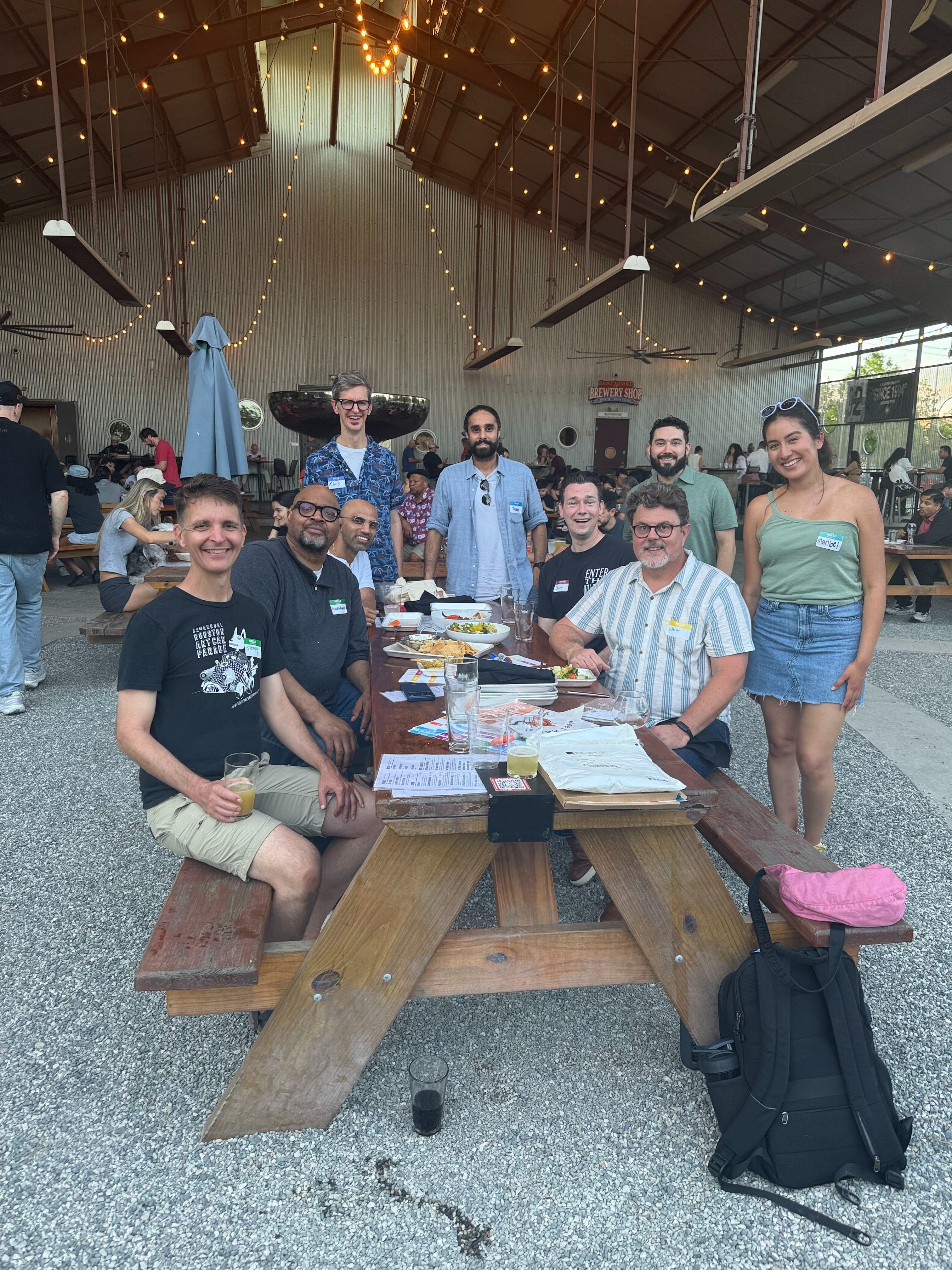
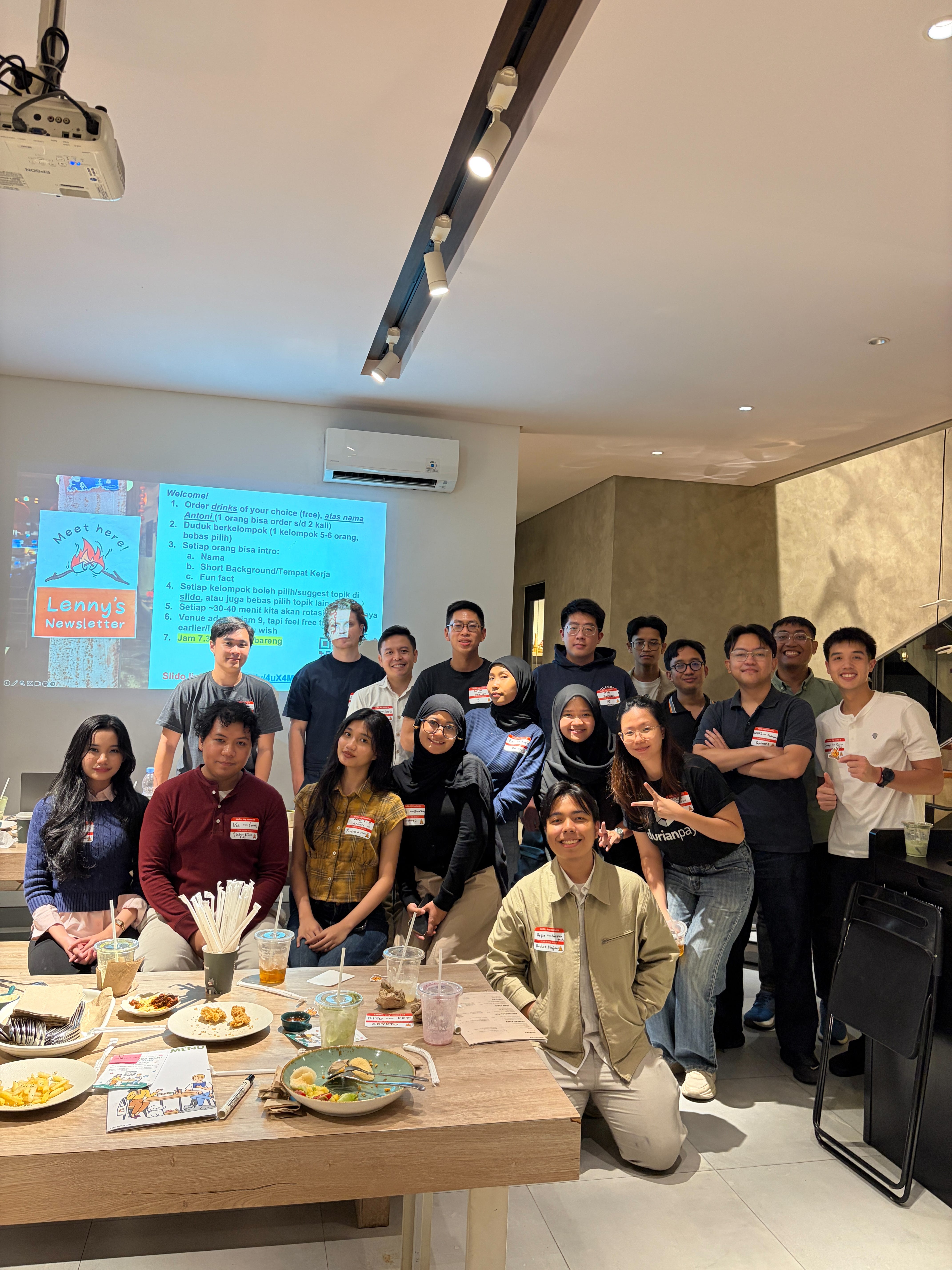
Photos from recent meetups
📚 Book club: The Mom Test
We have a special event for the community’s #book-club this month: June’s book club selection is The Mom Test by Rob Fitzpatrick, and the man himself, Rob, will be joining us on June 24 for a Q&A!
Join the #book-club channel to participate, and be sure to RSVP by June 23. Huge shoutout to Akil Bhagat for running the current iteration of our book club.
✍️ Final chance to participate in the tech worker sentiment survey
We’d love to get your perspective on what it’s like to work in tech right now. The survey will take less than 5 minutes to complete, and we’ll send you the anonymized raw data so you can perform your own analysis, along with an early look at the results before we share them publicly.
🎙️ New podcast episodes this week
Father of the iPod and iPhone on building taste, judgment, and creativity in the AI era | Tony Fadell: YouTube, Spotify, Apple Podcasts
Claude Fable 5 review: what the new Mythos model gets right (and very wrong): YouTube, Spotify, Apple Podcasts
5 Career Questions Your Old Playbook Can’t Answer: YouTube, Spotify, Apple
💥 Top threads this week
1. Tracking work stress using wearables
Thought of posting this on #talk-lol, but this is such an interesting use case and it seems real. Someone “hooked my Whoop to my work calendar to find which coworker gives me the most stress.” One of the replies: “HR reviews could never, this has actual data. Somewhere an Anthropic PM is adding ‘coworker stress forensics’ to the use case list. Legend behavior, monetize it.” ↗
—Guy Peled
Jeremy: I did a similar thing a few months ago, but used Apple Watch heart rate data. I only tried it once, but noticed that my heart rate was lower in larger meetings, but certain 1:1s definitely caused a spike. I’m fairly confident it was related to the level of engagement, but it was a fun vibe-coded experiment.
Guy Peled: Love it. So many factors go into this. Definitely beyond the people in the room:
Amount of people
Your host/participant role
Content (e.g. department restructuring announcement meeting)
etc.
Abdussamad Bello: Has to be a PM!
Miroslav Pavelek: I love the idea! But in comments it is also correctly pointed out that, well, Whoop (or any other device on the market) is not really good at measuring stress.
Jeremy: @Miroslav Pavelek It’s best to view them as directional instead of completely accurate. Exploring the concept with this level of data feels reasonable to me.
2. Weekly status reports for managers of managers
For managers of managers, how do you have your leaders provide weekly status reports for non-sprint/dev-related work? For example, initiatives that involve other divisions/teams, GTM work, research, etc.—how do you stay up to date with progress and what their teams are focused on? ↗
Ian McAllister: For anything weekly sent via email, do your teams a favor and enforce a very short/crisp format. Green/Yellow/Red status for key projects with a path to Green for anything Yellow or Red. Anything longer simply won’t get read, so all the effort writing it is wasted.
Save the thoughtful descriptions and details for monthly reviews when there is time to process and discuss.
Aaron Nichols: I think this depends greatly on why you want those updates. I’ve operated in teams where those updates needed to go to someone else—in which case I can just observe what gets reported through those normal means. I’ve also operated in orgs where my teams operated fine without my oversight on regular execution and MBR/QBR updates were sufficient to keep tabs. I tend to be more worried about whether my teams are getting good context and signal from me and their stakeholders than about status updates to me—but this all depends on your level, the size of your org, maturity, etc.
There’s a reality here that you simply do not stay up to date on what everyone is doing. You’ll spend all your energy keeping tabs instead of doing the work you actually should be doing.
Cindy Cohen: I’ve found the most effective updates focus on outcomes, risks, and decisions needed.
For cross-functional initiatives, I typically ask leaders to provide:
Objective / desired outcome
Current status (green/yellow/red)
Key accomplishments since last update
Next 1–2 priorities
Risks, dependencies, or blockers
Decisions or support needed from leadership
Then I use 1:1s to go deeper where needed rather than reviewing everything in detail.
The biggest mistake I see is reporting activity (“met with X, researched Y”) instead of progress toward an outcome. A short update tied to objectives usually provides enough visibility without creating reporting overhead.
Adam Thackeray: Put @Ian McAllister recommendation in bold. Simple is better. Get to the point and what help is needed (if at all).
3. Marketing and GTM for tiny teams
Question for solo founders and 2–5-person teams where everyone is an engineer or PM: how are you handling marketing/GTM day-to-day?
Roughly three paths I keep seeing, curious which one you took and how it went:
Hire an agency/freelancer—pay someone external to run SEO, content, ads, etc.
Hire a GTM/marketing person—first marketing hire, in-house
DIY—founder learns the tools and systems (SEO, email, social, ads) and just does it
React with (1), (2), (3) for what you actually did, and if you have 2 minutes I’d love to hear:
Roughly what it costs you per month (money and/or founder hours)
What you’d do differently if starting today
(Context: solo founder with a product background here—figuring out how much of marketing I should learn vs. buy. Not selling anything in this thread.) ↗
—Jake Luo
Shawn Jones: Hermes agent + company context brain (LLM-wiki) + growth skills + management tool (Notion/Linear/etc.).
Jake Luo: Cool solution. Would you mind sharing what growth skills you use? Do you use the Hermes agent to run your SoMe and ads campaigns as well?
Shawn Jones: I recommend creating your own custom skills for your industry/business, but have your agent reference these for inspiration: https://github.com/coreyhaines31/marketingskillsi
Primarily have my agent focused on the content development and management side. I’m planning to set up ad management next.
Christos Apartoglou: I think it is hard to assess what the right direction for your team is with the information you provided. My recommendation is to do the following exercise:
Spend some time understanding what your team needs at this life stage. Is it validating PMF? Is it demand generation? Something else?
For the needs you have identified, it will be important to then understand if they are one-offs or evergreen and the relative degree of prioritization. This can guide you on identifying the skills and competencies you may need to add to the team and for how long.
This information can help guide your staffing approach between the three options you are contemplating. If you already have done this work I am happy to jump on a quick 30-minute call and help make sense of it. I was an in-house marketing lead for many companies in the past and now have a fractional consulting practice (though I am not attempting to sell you anything—I don’t have capacity for more clients atm).
Matthew Stublefield: Founder and solopreneur here. I recommend the books Obviously Awesome and Crossing the Chasm and learning about positioning and copywriting. I have built and bought some AI tools that help me with copywriting and SEO, and that combined with some reading and learning has helped. I also paid for some inexpensive digital courses that helped (Csaba Borzasi and Katelyn Bourgain).
Bal Sieber: Path 3, with an asterisk. Solo consultancy here, product design background, so writing was never the scary part. The system was. What I actually run: I do the thinking and the voice, and a set of scheduled AI jobs does the reps. Sourcing who to talk to, drafting engagement, keeping the daily floor. My time lands around an hour a day of reviewing and steering rather than producing. Tooling is a few hundred a month all in. No agency, no hire. What I’d do differently: skip the months of treating marketing as the thing I’d get to after the real work. It only started compounding once it got the same seriousness as client work, a daily floor and a weekly review. One caveat: This shape works because my buyer hangs out where text lives. If your customers need ads or SEO at scale, my setup says nothing about that.
Jake Luo: Seems like many folks focus on content writing and SEO, which is great for building organic pipeline. But sometimes I feel like it’s slow. I would consider doing performance marketing to accelerate user acquisitions. Then how to run paid ads efficiently and effectively is another challenge to tackle.
Mih Fodor: Buy the Demand Curve program and go through it. You’ll have everything planned after that, and you can use what @Shawn Jones suggested.
Bal Sieber: Paid is the one lane I can’t speak to with real numbers, so season this hard. The one thing I’d check before buying acceleration, since it’s the part I do see every week: what the first session after the click does. Ads multiply whatever your signup-to-first-value path already does, so if that path leaks, paid mostly accelerates the leak, at CPC prices. The slow organic phase is annoying, but it’s also cheap rehearsal. You find the funnel holes while the traffic is free. I’d want evidence the path holds before paying to fill it.
Dinuka Wijesinghe: As a starting point before you think about execution, I’d encourage you to spend high-quality time developing the following:
Target market/ICP
Market dynamics incl. competitors and alternatives
Your positioning in relation to market dynamics (value prop, problem & solution statements, pricing etc.)
Likely acquisition channels based on where you think your ICP is and where you’re likely to recognize their trigger point
One primary GTM metric (e.g. # of users, amount of usage, $s etc.) and a goal for that metric—start with only one metric
Interrogate these with your team/investors/trusted advisors—once you feel like you know this back to front and have confidence in it, then think about how you could systematically execute outreach. For example, pick 2-3 channels to test, what would be an ideal cadence of outbound activity you’d need to execute to get meetings/users. At first this will be an educated guess, but you can refine once you get more data. Only then should you consider the mechanics of execution (i.e. the options you and others have listed here)—and the answer will become clearer. More importantly, you’ll have the rationale for the decision you made, which will make it easier for you to adjust if the data you get is different. Take your GTM as seriously as your product. Throwing AI at it or hiring an agency from the start won’t deliver good results if you as the founder don’t have the clarity to ask the right questions. If you want to chat specifics in relation to your market, I can do a short call.
Harshil Bhimani: I have worked with founders before, going 0 to 1. Usually they have a very good understanding of ICP. So the main goal is to find message-market fit. I think all options have tradeoffs. Imo you can do it yourself if you have bandwidth, otherwise outsource it to a good agency/freelancer. Hiring FT is very costly if you don’t have a playbook imo. Wish you luck!
4. How AI is changing product operating models
I’m curious to know, how has AI actually changed the way your product team operates?
For context, I’m working on re-organising the product operating model in my org and want to understand what’s working for others.
Two things I’m keen to learn from people who’ve gotten their hands dirty:
What’s one thing that’s genuinely changed in how your team works—not just speed, but how you’re structured, how you hand off to engineering, or how decisions get made?
I’m hearing PMs or designers pushing changes directly to GitHub a lot. We are not there yet, so for those who do, what does that look like in practice, and what did you need to be in place for it to work?
If you’ve worked with teams experimenting with BMAD or similar approaches, I’d love to hear what the PM side of that looks like.
If this has been answered before, happy to be pointed to the relevant thread. ↗
—Nishanth D’Souza