


👋 Hey there, I’m Lenny. Each week, I answer reader questions about building product, driving growth, and accelerating your career. For more: Lenny’s Podcast | Lennybot | How I AI | My favorite AI/PM courses, public speaking course, and interview prep copilot
P.S. Get a full free year of Google AI, Cursor, Lovable, Notion, Manus, Replit, Gamma, n8n, Canva, ElevenLabs, Factory, Wispr Flow, Fin, Supabase, Bolt, Linear, PostHog, Framer, Railway, Granola, Warp, Gumloop, Magic Patterns, Mobbin, Stripe Atlas, and ChatPRD, by becoming an Insider subscriber. Yes, this is for real.
On the heels of part 1 of my essential books for product builders series, I’m excited to share part 2.
As with last time, the books are organized by their jobs-to-be-done in your work and life. I’m again limiting myself to only three per category that I’ve personally read (and completed), and only books that have stood the test of time (i.e., no new books). As a bonus, at the end of the post I’ve also included a dozen fan favorites that either fell just below the ones I picked or I haven’t had a chance to read yet.
I know it’s hard to find time to read a whole book, and when you do, it’s hard to retain anything. As I mentioned in part 1, what’s worked for me is to read 10 minutes before bed as part of my wind-down routine. This has the added benefit of helping me sleep better! And as I read, I try to find one nugget or tactic that I can bring into my work that week. I take a photo of it and email it to myself (using this sweet app) for the next morning. My philosophy is that if I retain just one golden nugget per book over the years, I’m happy. That’s how it usually ends up working out anyway.
So, as I share the book recommendations, I’ll also highlight a nugget of wisdom that’s still with me over the many years since I first read these books.
Let’s get into it.
“Books are the closest thing you’ll ever come to finding cheat codes for real life. You can access the entire learnings of someone else’s career in a few hours.” —Tobi Lütke
I want to get better at design
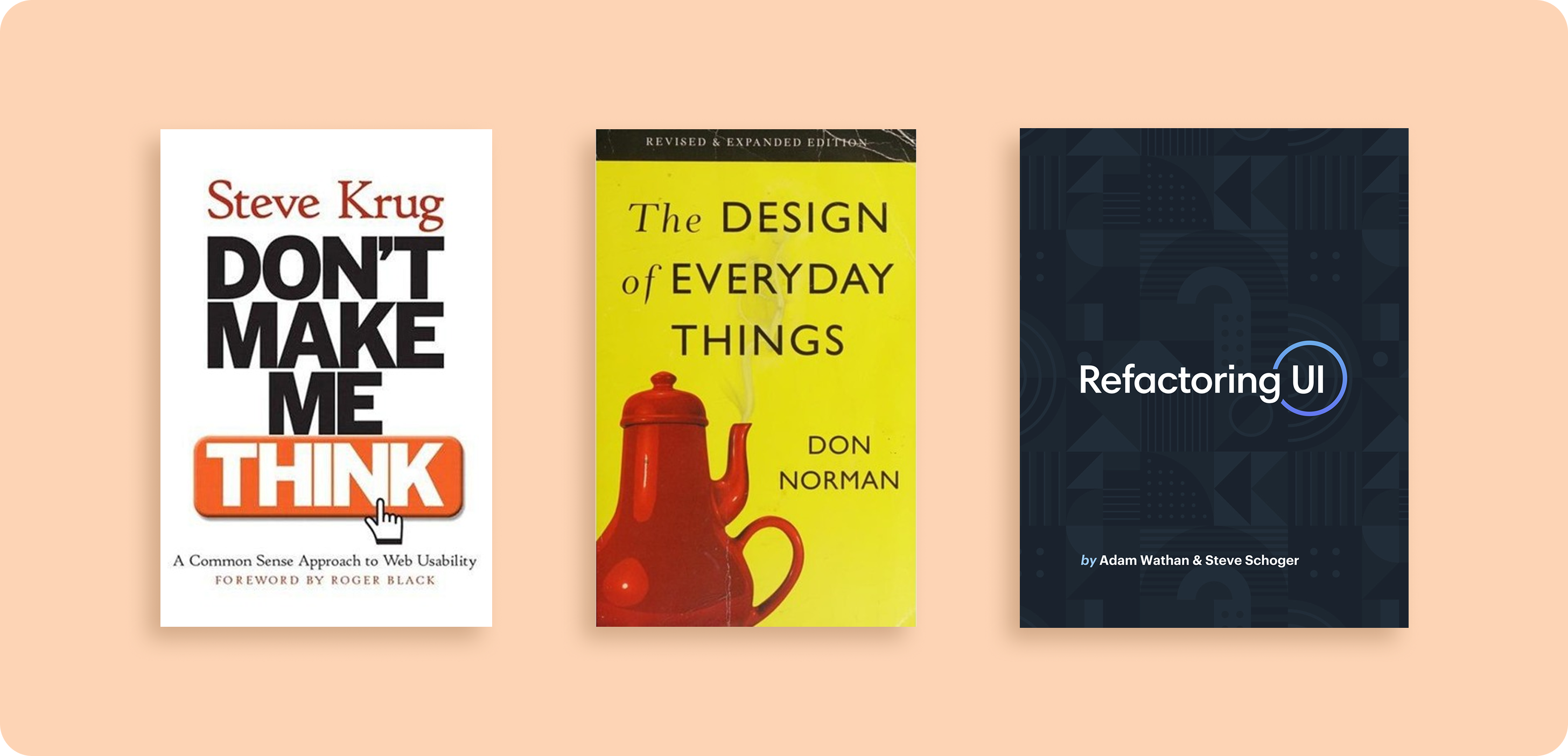
Before reading these books, I thought design was a squishy, subjective thing. It’s not. Don’t Make Me Think taught me how to objectively make a product UI work (and feel) better. The Design of Everyday Things showed me that when I struggle with a product, it’s not my fault—it’s the design’s. Refactoring UI gave me a ton of specific design tactics.
Don’t Make Me Think by Steve Krug
The Design of Everyday Things by Don Norman
Refactoring UI by Adam Wathan and Steve Schoger
I want to improve my taste/craft
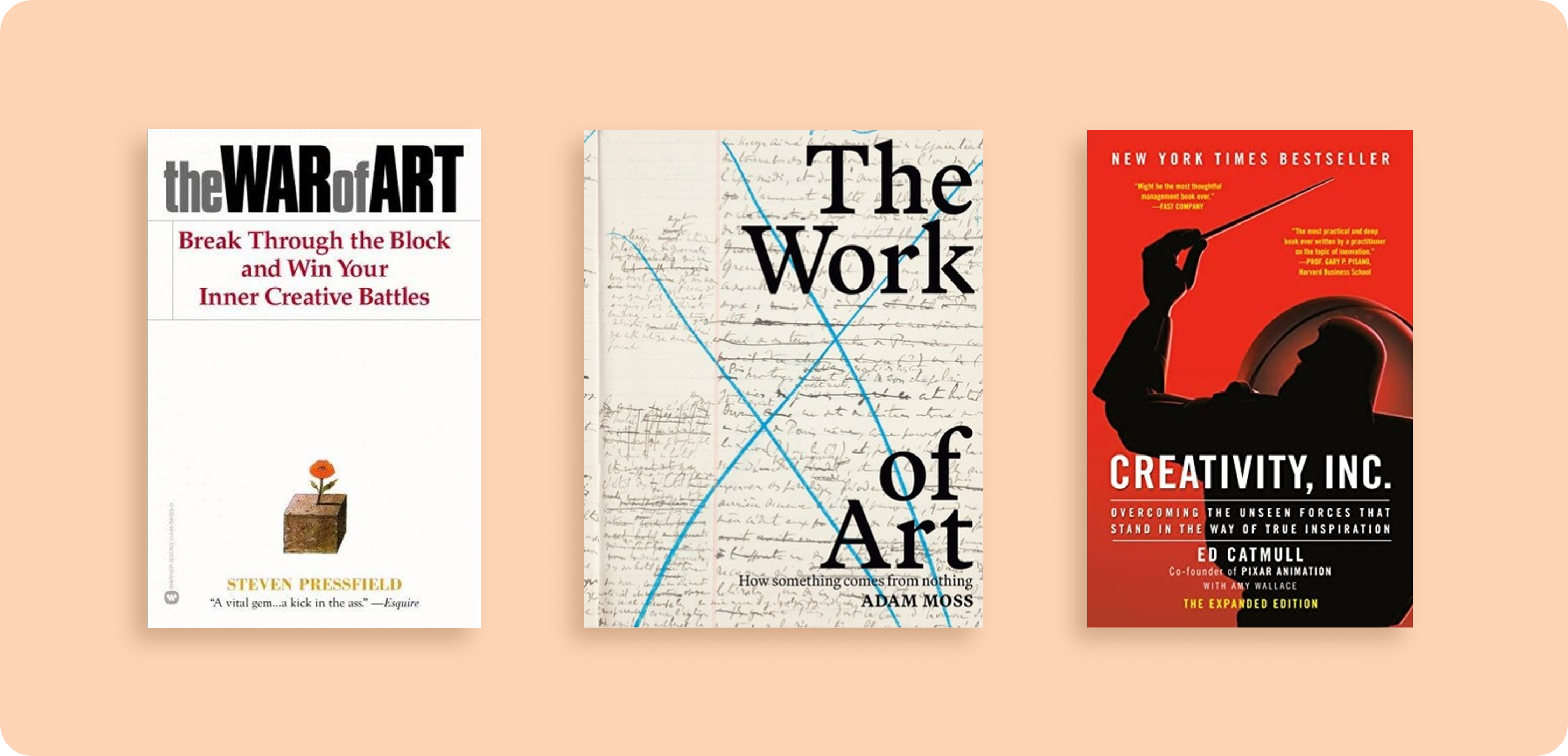
I’ve always looked up to people who have great taste, and lucky for me, guests on my podcast consistently remind me that it isn’t something you’re born with—taste is something you can learn. The War of Art helped me learn how to recognize and overcome the internal “resistance” that comes with creating something new and different. The Work of Art showed me the creative process of dozens of high-taste creators. Creativity, Inc. taught me to protect my (and my team’s) “ugly babies”—early half-baked ideas that otherwise get squashed.
The War of Art by Steven Pressfield
The Work of Art by Adam Moss
Creativity, Inc. by Ed Catmull
I want to get better at influence
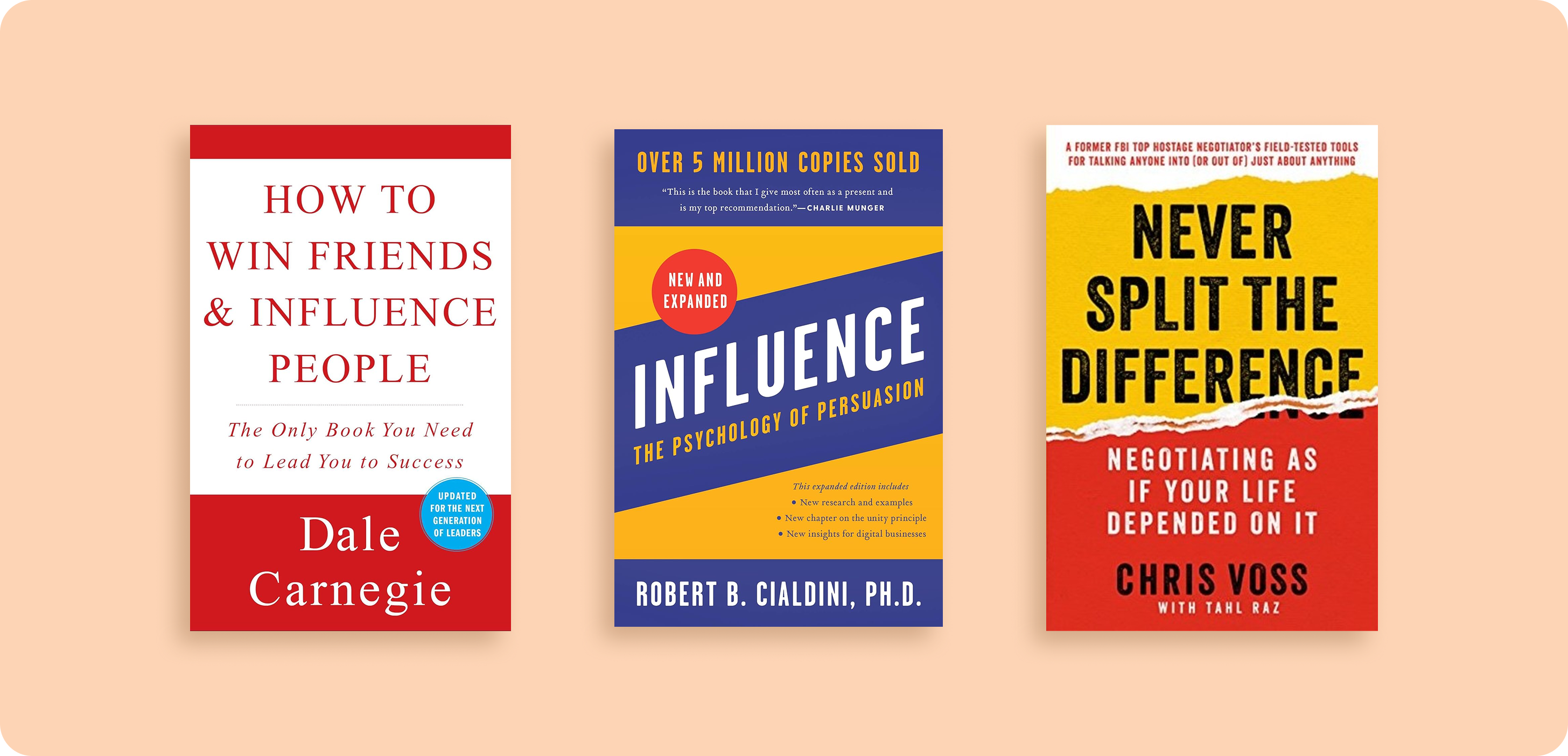
Influence—maybe you’ve heard it’s important? It’s something I was very bad at early in my career, and I’ve had to learn how to do it well. How to Win Friends and Influence People showed me the power in being interested vs. interesting. Influence taught me the fundamentals of how people change their mind: social proof, authority, scarcity, and simply being liked. Never Split the Difference taught me how to shift a negotiation from “you vs. me” to “us” working together to solve the problem.
How to Win Friends and Influence People by Dale Carnegie
Influence by Robert Cialdini
Never Split the Difference by Chris Voss
I want to start a company
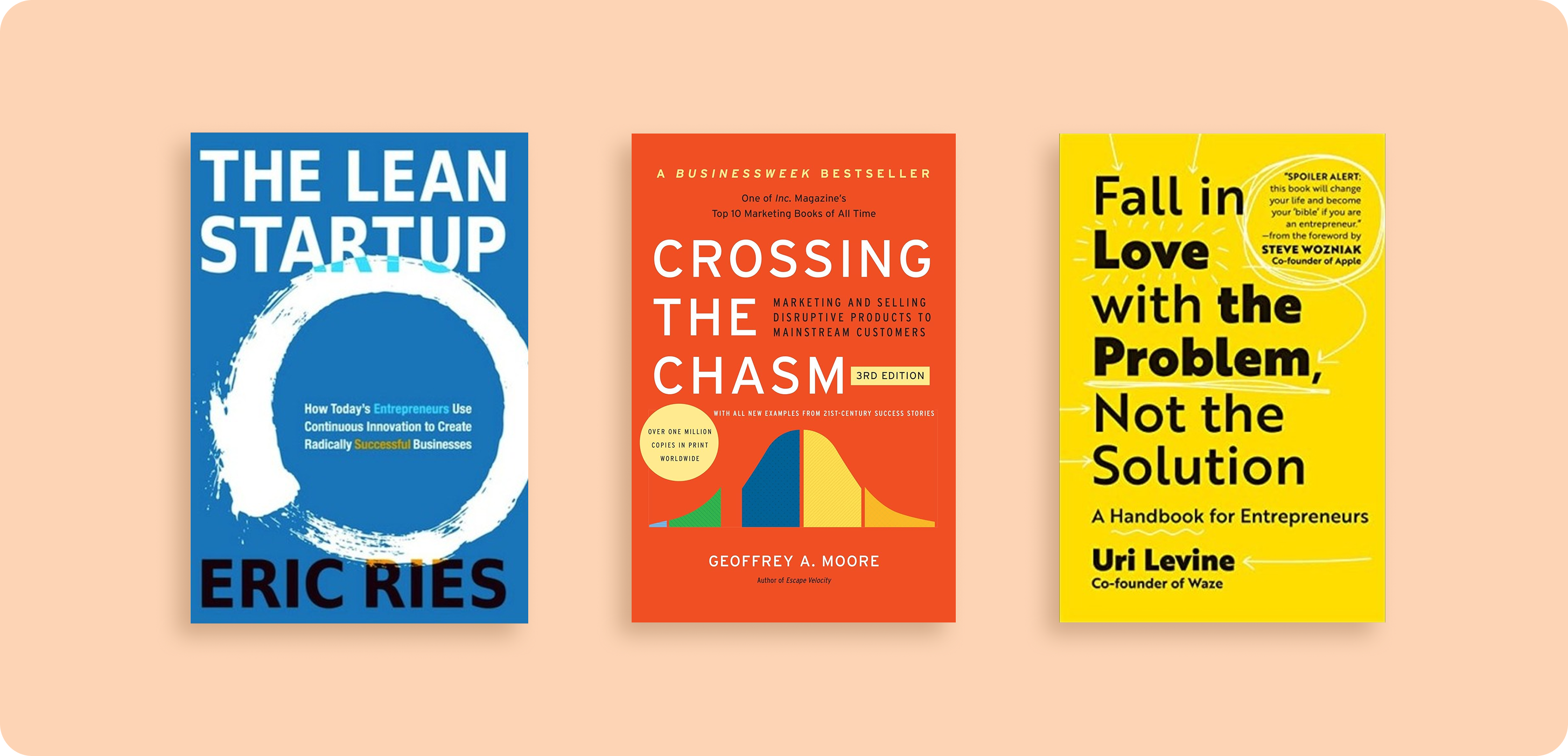
I’ll be honest, I didn’t read a lot of books when I was starting my company. But I should have. When I finally read The Lean Startup, it showed me how to be smart about where to start, and how to iterate efficiently. Crossing the Chasm taught me what a good early user looks like. Fall in Love with the Problem, Not the Solution finally gave me a very practical guide for every step of the founder journey.
The Lean Startup by Eric Ries
Crossing the Chasm by Geoffrey Moore
Fall in Love with the Problem, Not the Solution by Uri Levine
I want to advance my career
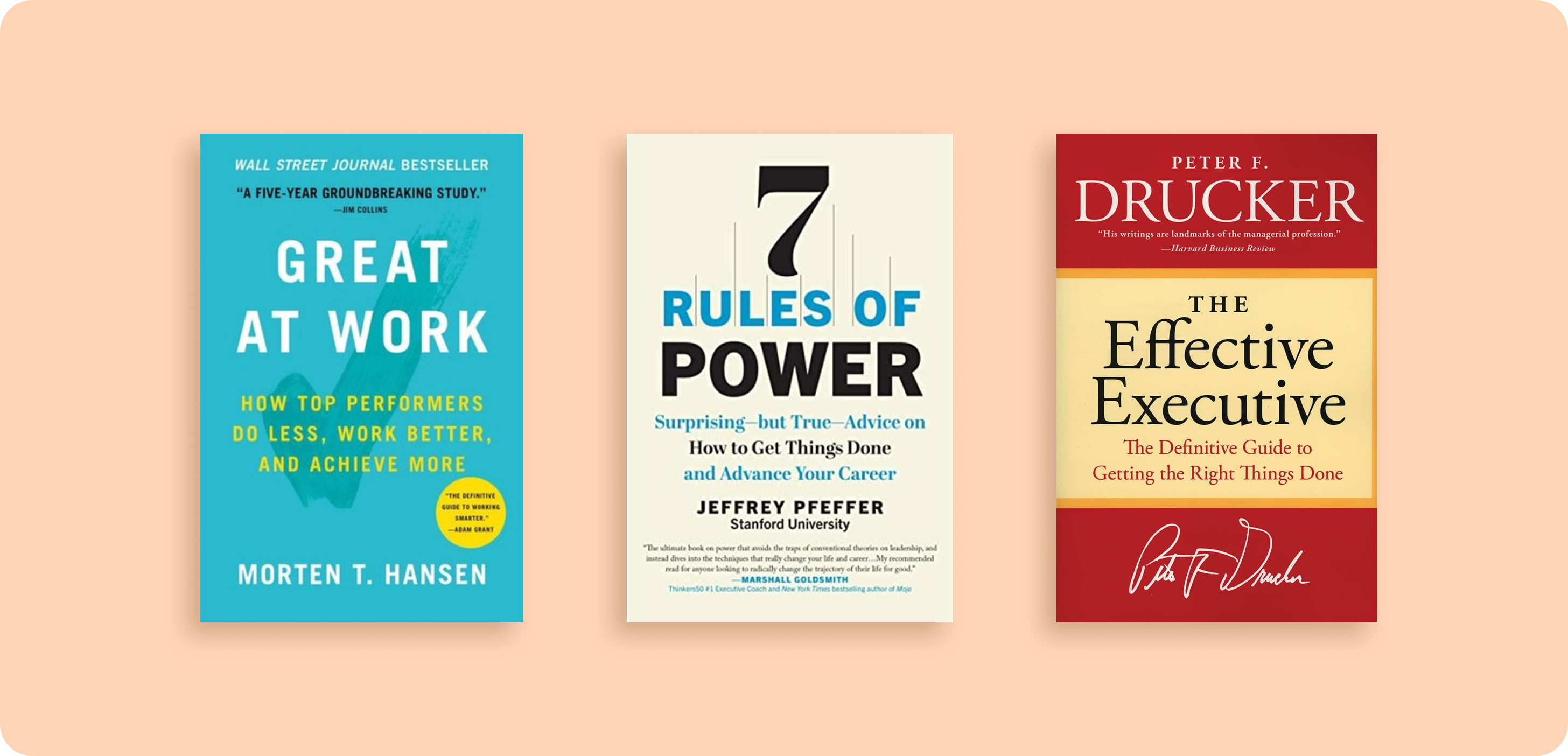
There are certain books you read and you’re just like, “Wow, this really explains what’s going on around here.” These three did that for me. Great at Work showed me that people who rise fastest focus on fewer things but do them extremely well. 7 Rules of Power taught me that, often, it isn’t the most talented or nice people who end up winning. The Effective Executive helped me understand that efficiency is doing things well, while effectiveness is doing the right (highest-leverage) things.
Great at Work by Morten T. Hansen
7 Rules of Power by Jeffrey Pfeffer
The Effective Executive by Peter Drucker
I want to be happier (continued)
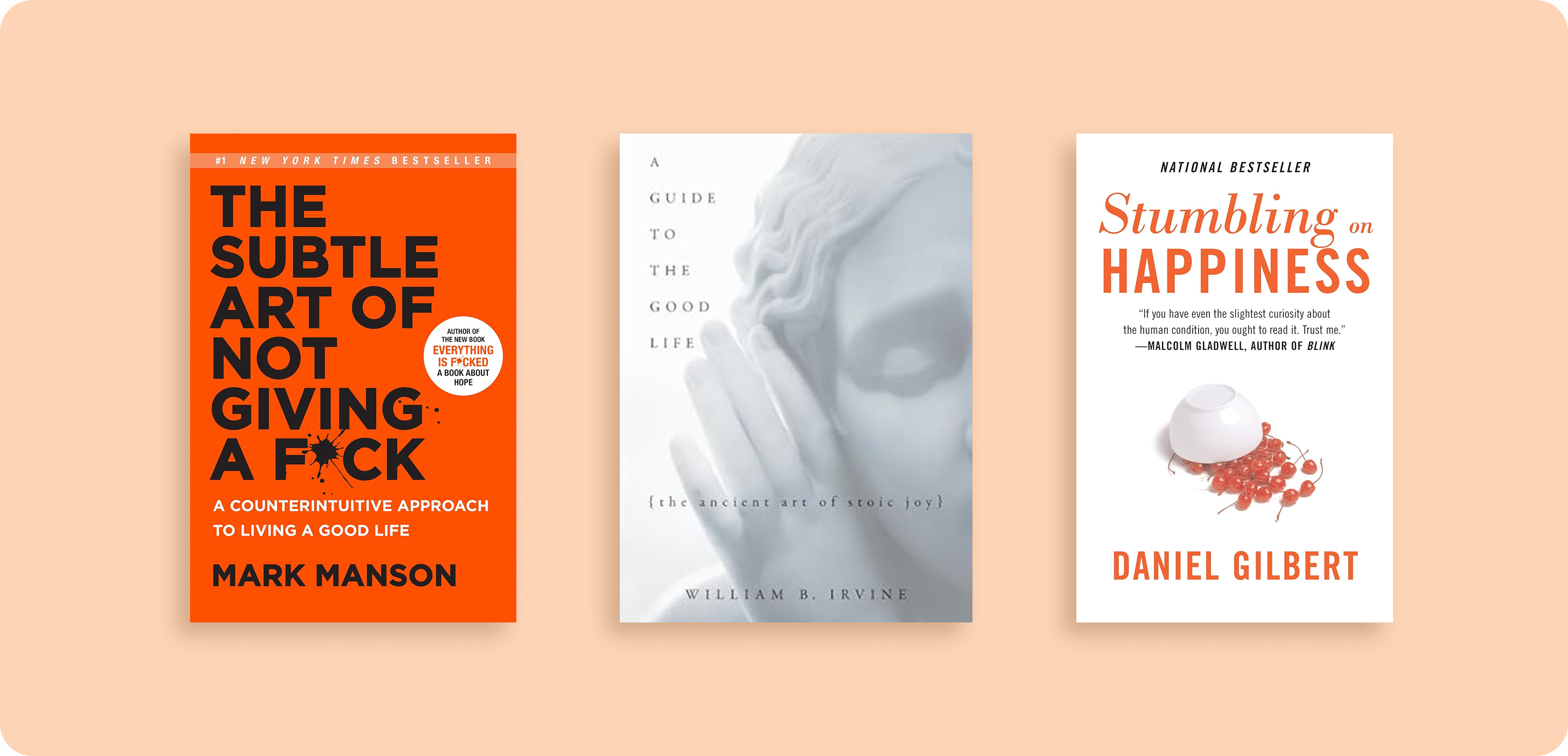
A few readers suggested that this category should have come first last time—what else matters if you can’t be happy? So I’m including another three books that made me a happier person. The Subtle Art of Not Giving a F*ck taught me that freedom from work isn’t the real goal. Instead, it’s your opportunity to figure out what problems you want to spend time solving, because the most lasting fulfillment comes from solving problems we care about. A Guide to the Good Life gave me the skill of “negative visualization,” which I use to this day. Stumbling on Happiness showed me that we’re often (very) wrong about what will make us happy.
The Subtle Art of Not Giving a F*ck by Mark Manson
A Guide to the Good Life by William B. Irvine
Stumbling on Happiness by Daniel Gilbert