


👋 Hey there, I’m Lenny. Each week, I answer reader questions about building product, driving growth, and accelerating your career. For more: Lenny’s Podcast | Lennybot | How I AI | My favorite AI/PM courses, public speaking course, and interview prep copilot
P.S. Get a free full year of Lovable, Manus, Replit, Gamma, n8n, Canva, ElevenLabs, Amp, Factory, Devin, Bolt, Wispr Flow, Linear, PostHog, Framer, Railway, Granola, Warp, Perplexity, Magic Patterns, Mobbin, ChatPRD, and Stripe Atlas by becoming an Insider subscriber. Yes, this is for real.
Molly Graham is the epitome of the type of person I love to collaborate with. She spent decades working closely with some of the most successful leaders in tech, including Mark Zuckerberg, Sheryl Sandberg, Chamath Palihapitiya, and Bret Taylor, and more recently (through her Glue Club community), she’s guided hundreds of leaders through the chaotic, lonely, and overwhelming journey inside early-stage and fast-growing companies. Drawing from these experiences, she is able to find patterns in what works and doesn’t and, more than anyone else I’ve met, is able to translate these lessons into powerful and memorable metaphors.
In her piece below, which I suspect will become as iconic as “Give Away Your Legos,” she builds on our recent podcast conversation to unpack a management framework that will change how you tackle team challenges: the Waterline Model.
Let’s get into it.
For more from Molly, check out her Substack and LinkedIn, and her Glue Club community.
There’s a moment most leaders recognize. You’ve set a clear goal (or so you think), your team’s bought in (or so they say), yet timelines keep slipping, execution is messy, and you’re having the same conversations over and over. When that happens, it’s tempting to jump straight to people-based explanations: “This team just doesn’t work well together.” “That person isn’t strong enough.” “We need better execution.”
Sometimes that’s true. But after two decades of working inside companies like Google, Facebook, and the Chan Zuckerberg Initiative, and supporting leaders at companies like Stripe, Anthropic, OpenAI, Microsoft, and Gamma, I’ve come to believe that blaming people for problems that are actually structural is one of the biggest leadership traps there is.
I’ve learned to slow down in these moments and use a simple diagnostic tool I picked up early in my career: the Waterline Model.
I first learned how to use this tool when I was leading 75-day wilderness expeditions in Patagonia and Alaska for the National Outdoor Leadership School at age 22. Out there, when a team isn’t working, things fall apart fast. People get cold, hungry, tired, scared. There’s no hiding behind process or politeness, and there’s definitely no time for vague diagnoses like “the vibe is off.” You have to identify the source of what’s disrupting the team—not just the symptoms—and fix it quickly.

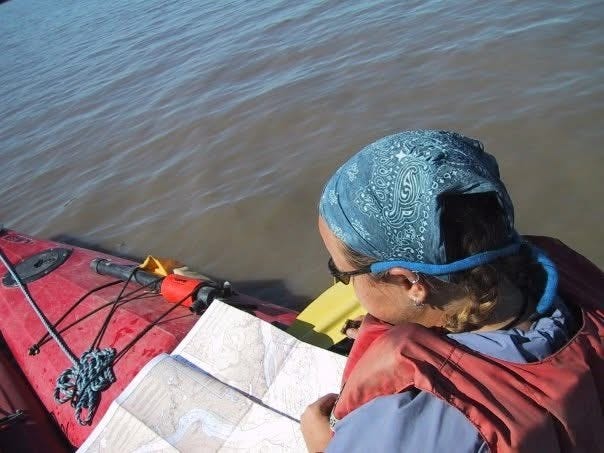
We learned the Waterline Model1 as instructors and taught it as part of the curriculum to students. Since then, I’ve used it anytime a team is underperforming, missing goals, or struggling more than they should be. More than anything, it has helped me avoid misdiagnosing problems, cycling through people unnecessarily, and wasting time fixing the wrong thing. At its core, the Waterline Model is a way to diagnose where a problem is actually coming from before you decide what to do about it.
In this post, I’ll walk through the model and show you how to use it as a practical diagnostic tool when a team is underperforming. We’ll look at the four levels where problems tend to show up—structure, dynamics, interpersonal, and individual—and how to work through them in the right order. By the end, you should be better equipped to slow down in those “something’s off” moments, identify the real source of friction on a team, and fix the right problem instead of defaulting to people changes.
How the Waterline Model works
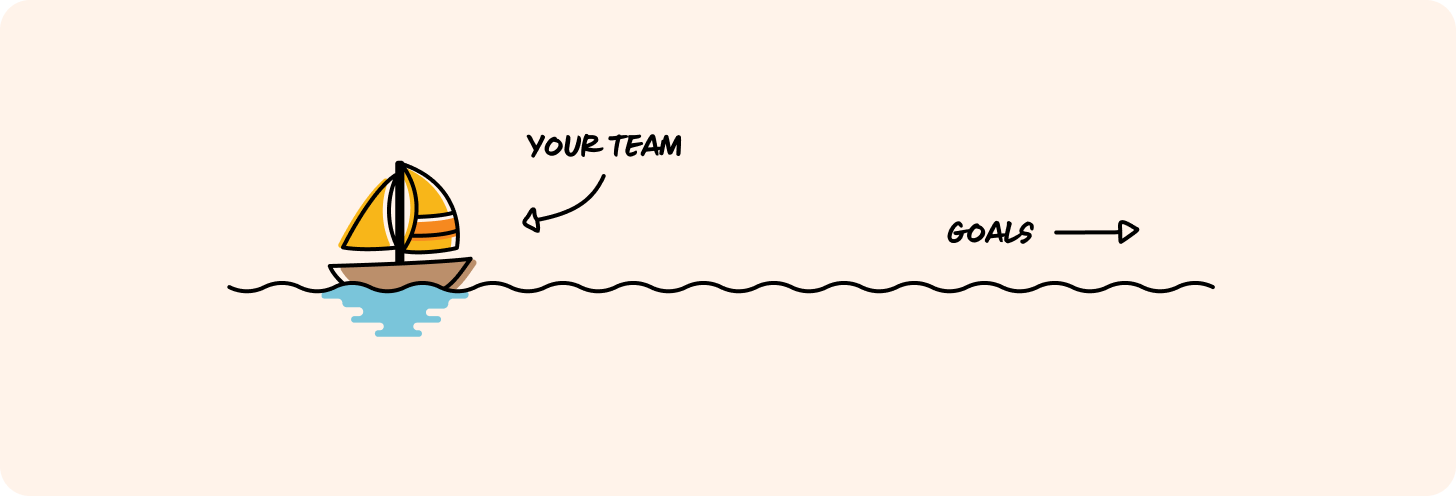
Here’s the basic picture. Imagine a boat moving across the water—that boat is your team. The boat’s destination is your goal: hitting a KPI, winning a major new customer, shipping a product. Sometimes the water is calm and the boat is moving forward smoothly. Other times, it feels like you’re rowing through a hurricane and no one can quite explain why.
When I use this model, I’m able to move beyond the natural human instinct to automatically blame the people. The Waterline Model helps me investigate one question: What’s going on below the surface that’s making things harder than they should be?
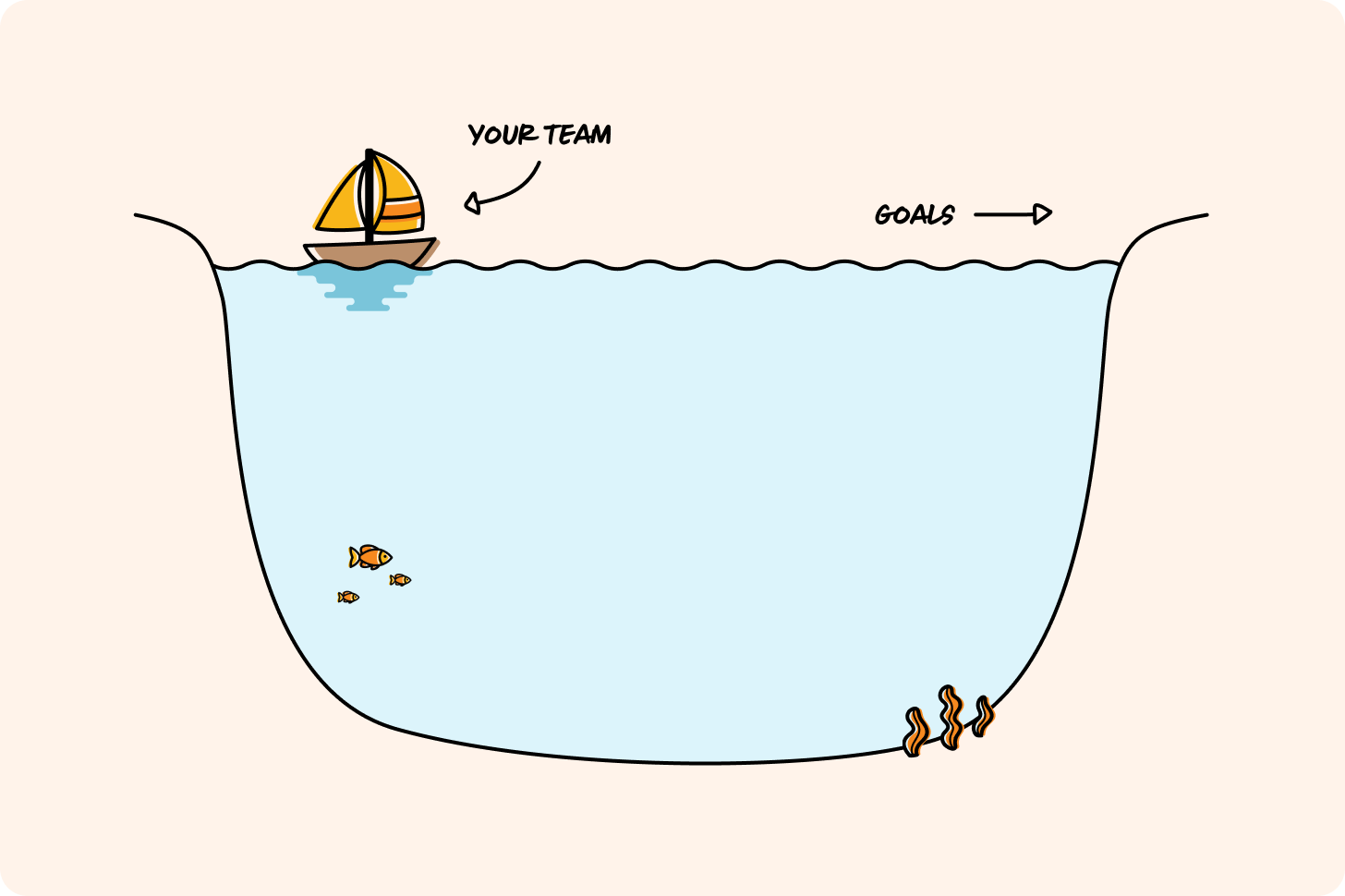
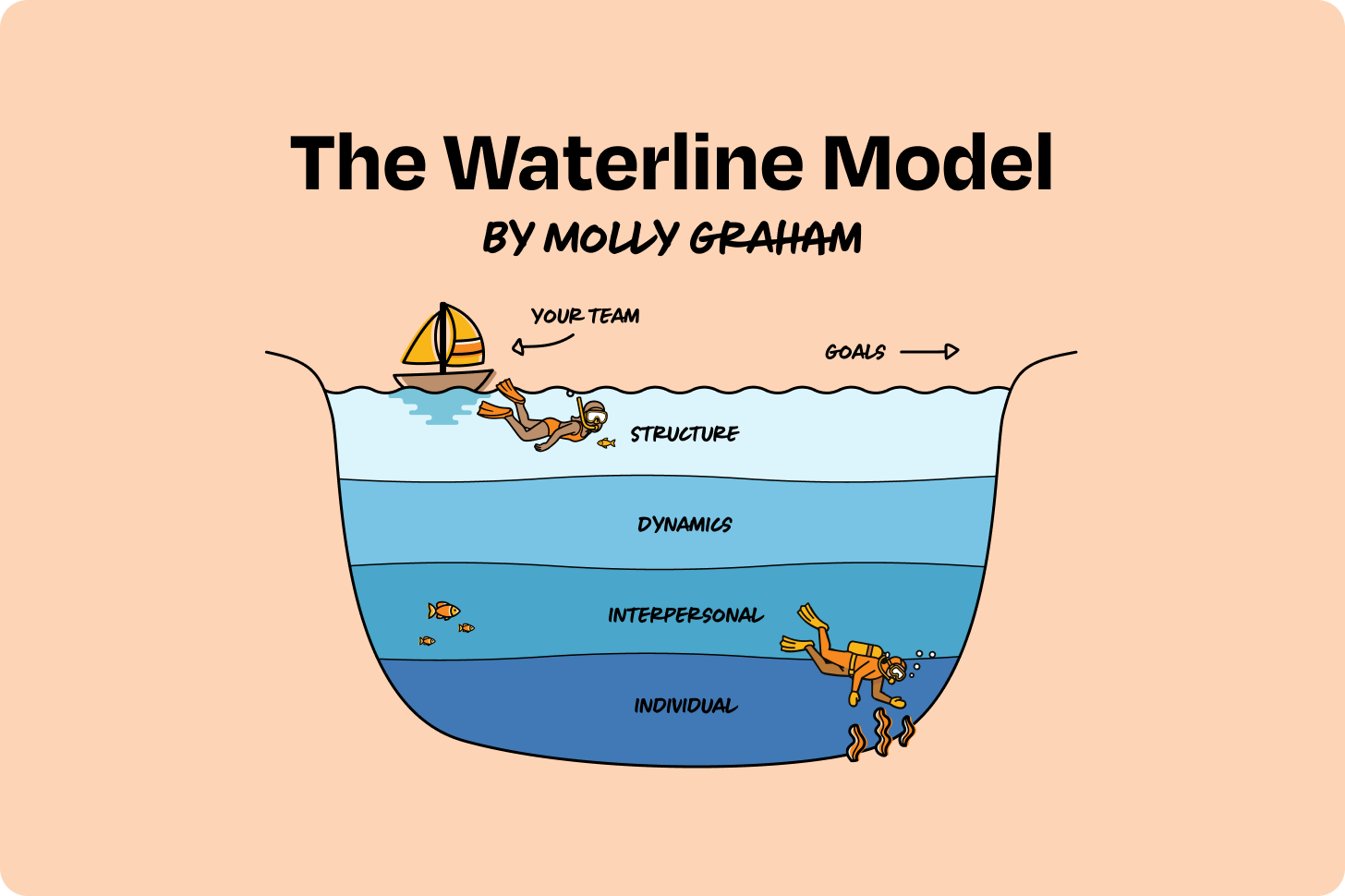
This model gives you four places to look, in order, and it comes with a memorable rule of thumb: snorkel before you scuba. Start at the top, always. Snorkeling means checking the shared systems first—goals, roles, and decision-making—before you start diagnosing personalities.
At the top, just below the surface, is structure. This is the stuff that helps people know what they’re doing, why they’re doing it, and how success is defined: vision, goals, context, expectations, role clarity, and org design. In my experience, this is where a huge percentage of issues on teams actually shows up.
The next layer is dynamics—how the team works together day-to-day. This is where I look at how decisions get made, how conflict shows up and gets resolved, and how information flows (or doesn’t). Even with clear goals and roles, teams can struggle here. Structure and dynamics are systems shared by everyone on the team, so you can most directly affect the collective team performance at these levels.
Below that is interpersonal—tension between two people, lack of trust, unresolved conflict, style clashes. These issues are real, but they’re often caused or amplified by problems higher up.
And at the very bottom is individual—what’s happening inside a single person: skill gaps, stress, confidence, values, life stuff.
All four layers matter. Any one of them can make the water choppy.
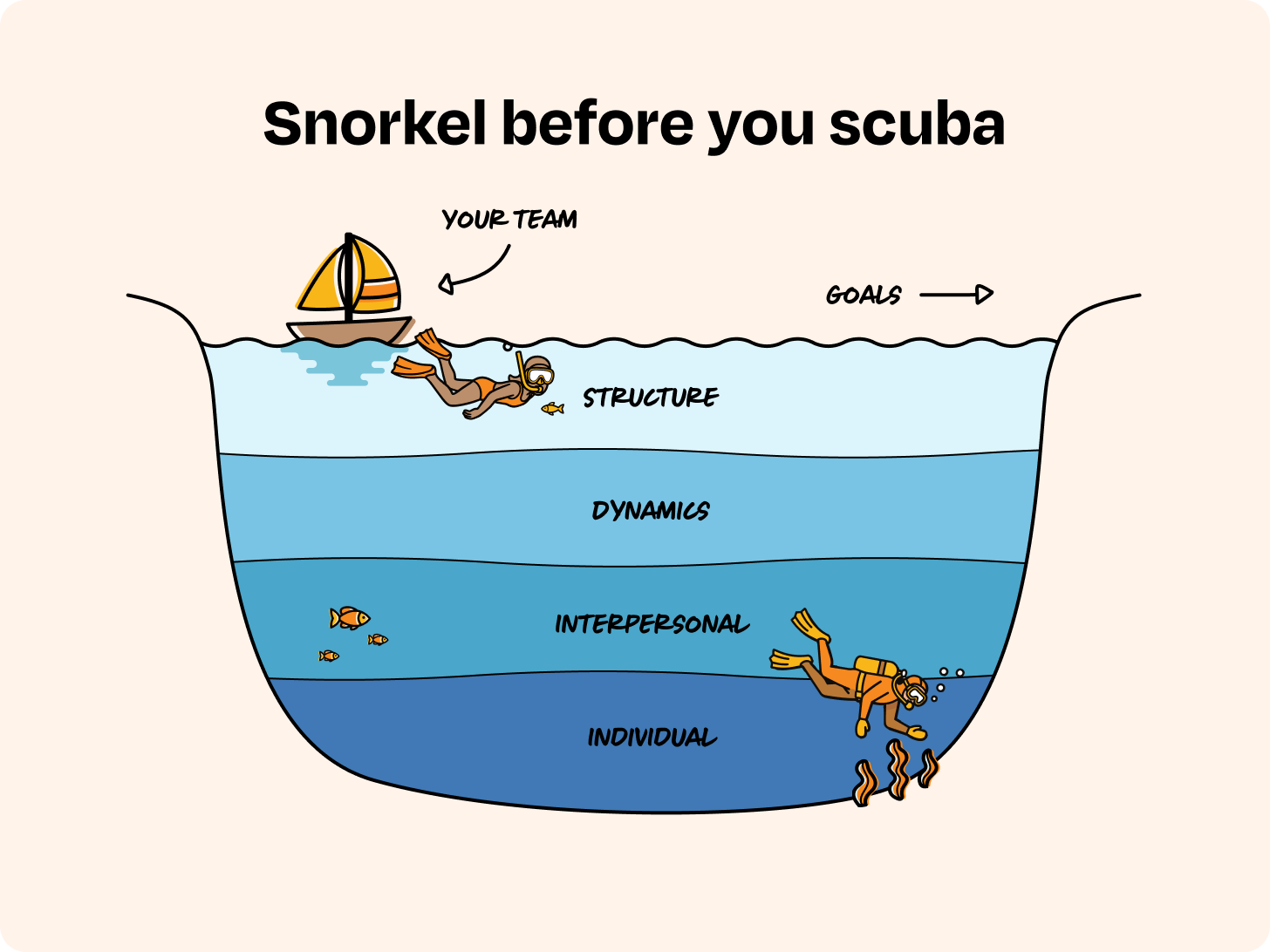
But the Waterline Model and “snorkel before you scuba” remind me to start with the issues that impact the most people—closest to the surface—and only go deeper once I’ve ruled things out. Before you decide someone is the issue, you need to know that structure and dynamics aren’t pushing them toward exactly the behavior you’re frustrated by.
Let’s walk through each level and use common examples of issues on underperforming teams to show how you can use the model.
Structure: the most common culprit
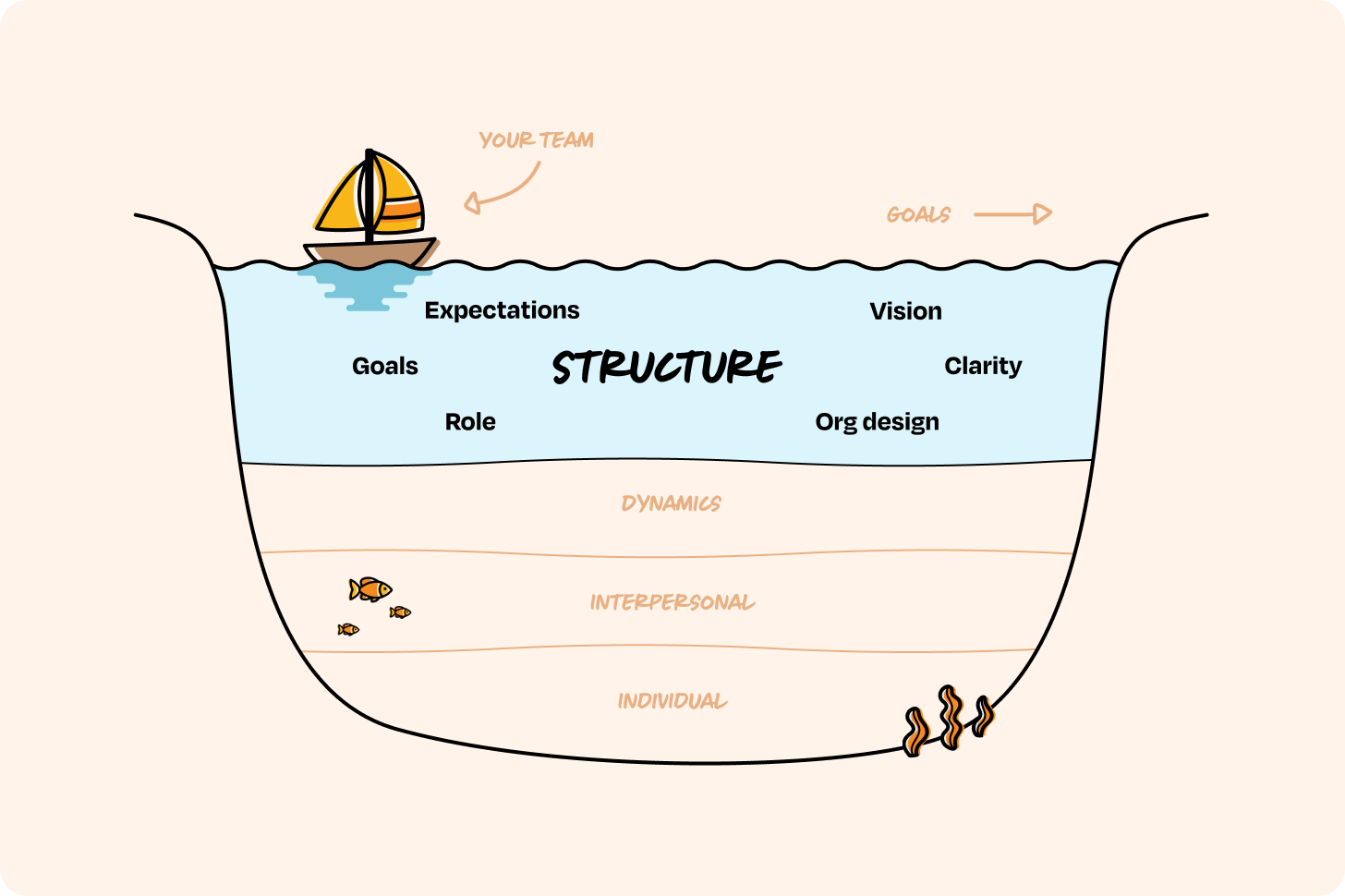
A few years ago, I was asked to take over a struggling marketing team: “Go figure out what this team actually does, and why we’re spending so much money without seeing results.”
The temptation in a situation like this is to diagnose the people—who is a high performer, who is dragging people down—but the Waterline Model has taught me to start by evaluating the structure. So instead, I asked each person on my new team how they would describe their role, what goals they thought the team was responsible for, and what numbers they believed they personally owned and were expected to move. Almost immediately, those questions surfaced structural issues.
The team’s answers were wildly inconsistent. Individuals had no idea what their goals were or which metric the team was responsible for. People defined their roles in ways that were far too narrow, or disconnected, to make sense. What leadership thought the team was responsible for, and how success was measured, were very different from how people understood their own jobs.
In this case, it was impossible to determine whether the individuals were the right fit, because they were operating inside a deeply broken structure. If I had automatically assumed people were the problem, I probably would have fired the whole team and started over again. And then I’d likely have ended up with the same issues all over again. But once I realized this was a structural problem, the fix was clear.
I started by re-clarifying the team’s mandate, the goals the team actually owned, individual role definitions, and what success looked like for each role. Only after that work was complete did it make sense to evaluate whether each individual was a good fit for their role.
That clarity surfaced a few real fit issues. But it also immediately improved performance for most of the team—simply because people finally knew what their job was and what was expected of them. People are often smart and motivated, but (to use the boat analogy) they’re rowing in different directions because the structure isn’t doing its job. Structural clarity alone often resolves more issues than you’d expect.
Dynamics: teams behaving rationally inside bad systems
Dynamics are the cultural norms you’ve built for how the team actually works together day-to-day. What’s experienced, not what’s written down. You can have clear goals and roles and still find yourself with decisions bottlenecked at the top, endless debate with no resolution, or constant confusion about who has input versus who actually decides.
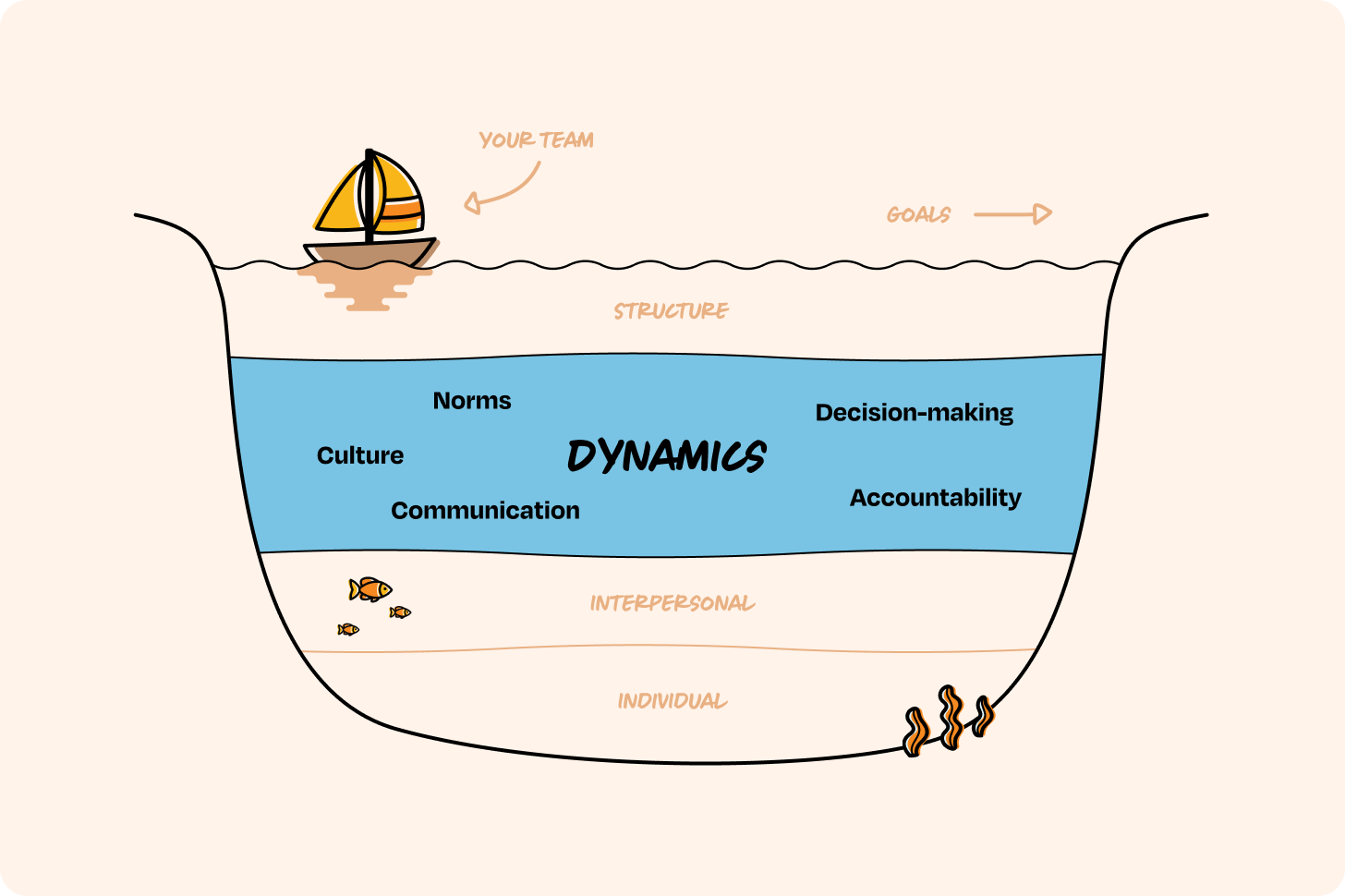
As an example, one member in Glue Club came to us with a familiar story: “My founder is constantly frustrated that the team is moving more slowly than they want. But when people try to move quickly or ship things or make decisions, the founder swoops in and unmakes decisions at the last minute or second-guesses people’s judgment. It doesn’t feel safe to move quickly.”
This wasn’t a structure problem. Goals were clear, roles were defined, and, on paper, people had decision rights. But in practice, decisions weren’t stable. Work would move forward, then get reversed later. Context would change after the fact. People learned that even if they did what was asked, they could still be wrong.
The team adapted in a very rational way: They slowed down. They added extra layers of alignment. They escalated decisions that technically didn’t need to be escalated. They optimized for not being wrong instead of for progress.
From the outside, it looked like a performance problem. From the inside, it felt like self-protection. The dynamics of this team taught people that speed is risky, and that was the problem.
People adapt quickly to what’s rewarded, punished, tolerated, or ignored. Over time, the team learns how to survive inside the system a leader creates, whether implicit or explicit. Dynamics problems show up when a team’s behavior makes sense given the environment—even if the results are exactly what you don’t want.
Dynamics problems often show up as process issues, but they’re rarely solved by process alone. They usually trace back to the signals leaders send through their behavior: what gets rewarded, what gets second-guessed, and what happens when things go wrong. That’s why dynamics issues can feel harder than structural ones. Fixing them doesn’t require a re-org or a new doc; it requires leaders to be consistent about how decisions are made, how disagreement is handled, and when they intervene. It requires a hard look in the mirror at how your behavior or the behavior of those above you is causing people to respond.
The good news is that when those signals change, behavior changes quickly. Teams adapt fast to new rules, especially when they’re enforced through action, not words. That’s the leverage at the dynamics level: change the rules of interaction, and people will respond.
Interpersonal: don’t assume interpersonal conflict, but don’t ignore it either
When something feels off on a team, leaders almost always leap to this layer first—“those two people hate each other.” To be fair, a lot of the time that instinct isn’t wrong; it’s just incomplete.
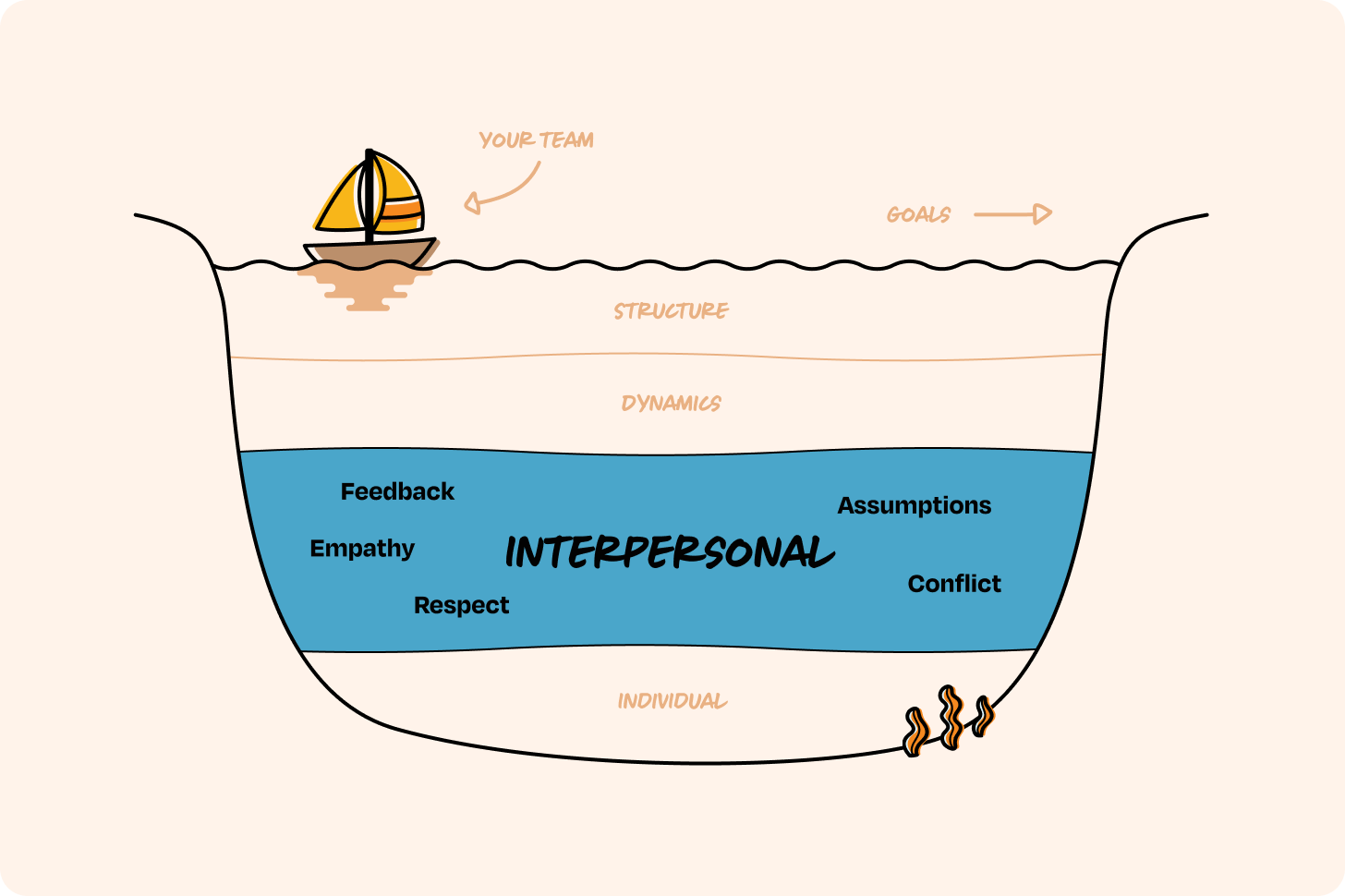
Very often, what looks like interpersonal conflict is actually being caused by something higher up the waterline. Roles aren’t clear, ownership overlaps, or individual or team incentives are not aligned. Two people are stepping on each other’s toes because the structure put them there. In those cases, the conflict isn’t really about the relationship. It’s a structural problem wearing a human face.
But interpersonal dynamics can absolutely destroy teams all on their own. You can have clear goals, clean roles, solid decision-making, etc., and still have two leaders who fundamentally don’t trust or like each other. And when that’s true, it always shows up in the business eventually, through slowed decisions, hoarded information, and teams quietly picking sides.
Once you’ve ruled out structure and dynamics issues, you move to interpersonal, and this is the moment where management gets more direct. At this level, the fix isn’t redesigning the system but, rather, addressing the relationship itself. That usually means naming the tension explicitly, grounding the conversation in how it’s affecting the work, and being clear about what needs to change for the relationship to function. You can make building a solid relationship with a business partner an expectation of someone’s role—something you judge their performance on, particularly if it’s business-critical.
This is the more familiar work of team leadership and management. Sometimes that work leads to repair. Sometimes it becomes clear that trust won’t be rebuilt in a reasonable time frame, and a change has to be made.
Individual: only make it about the person after the system is sound
If your goals are clear, the role is cleaned up, the dynamics are working well, and someone is still not performing, then you’re likely looking at an actual individual issue. At that point, the work is no longer diagnostic. It’s about making a decision.
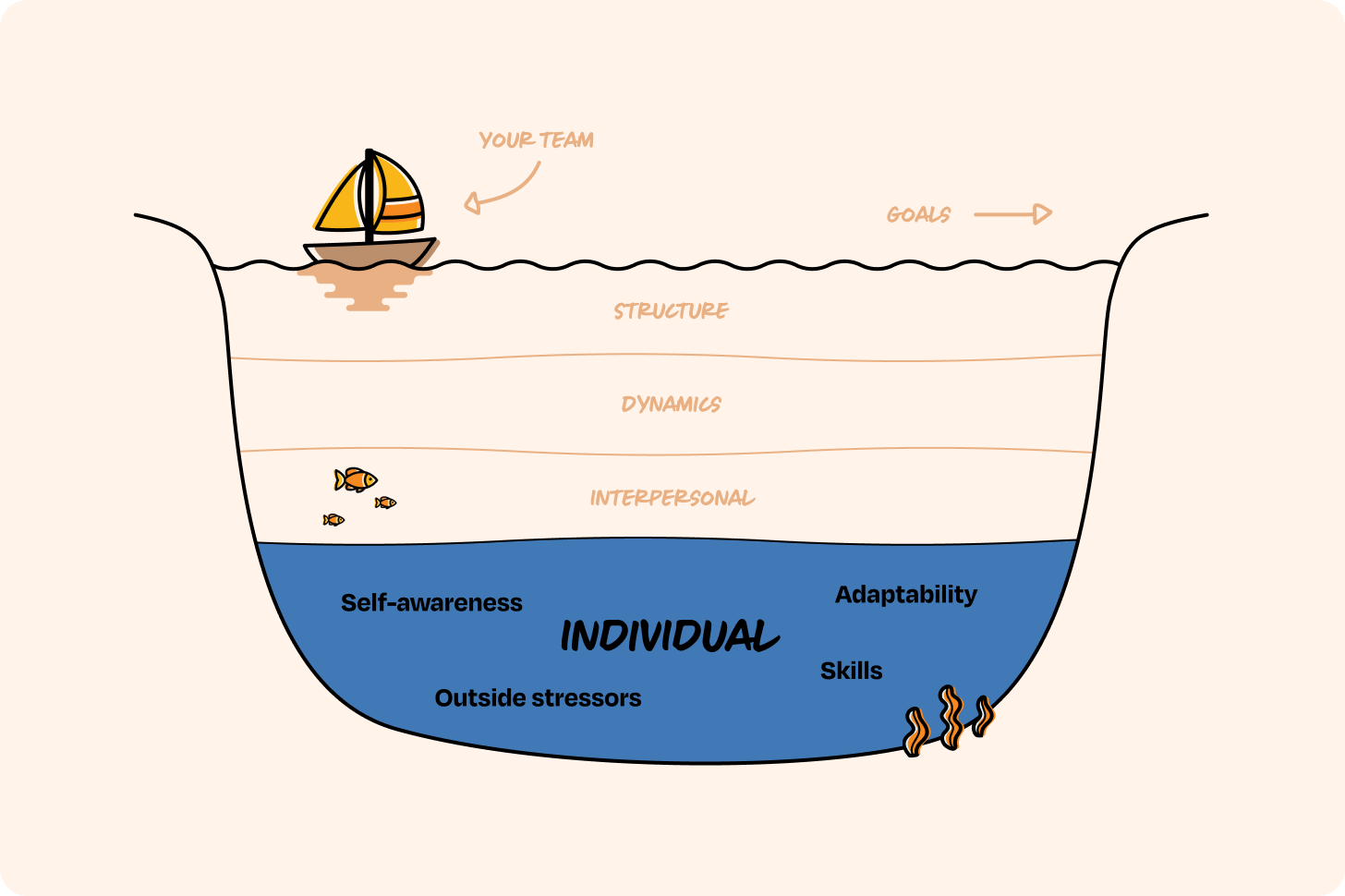
Individual issues can be personal. Someone going through a tough time outside of work may not be able to meet the expectations of the role right now. Your job as a manager is to decide whether the person can successfully fulfill the role, given the current circumstances.
Evaluate the person against the role as it exists today. Decide whether the gap is coachable in the time frame the business can afford. If it is, invest and be explicit about what needs to change. If it’s not, change the role or make a clean exit. What doesn’t work is lingering in ambiguity.
That’s the leverage at the individual level: once the system is sound, clarity and decisiveness are kinder than dragging things out.
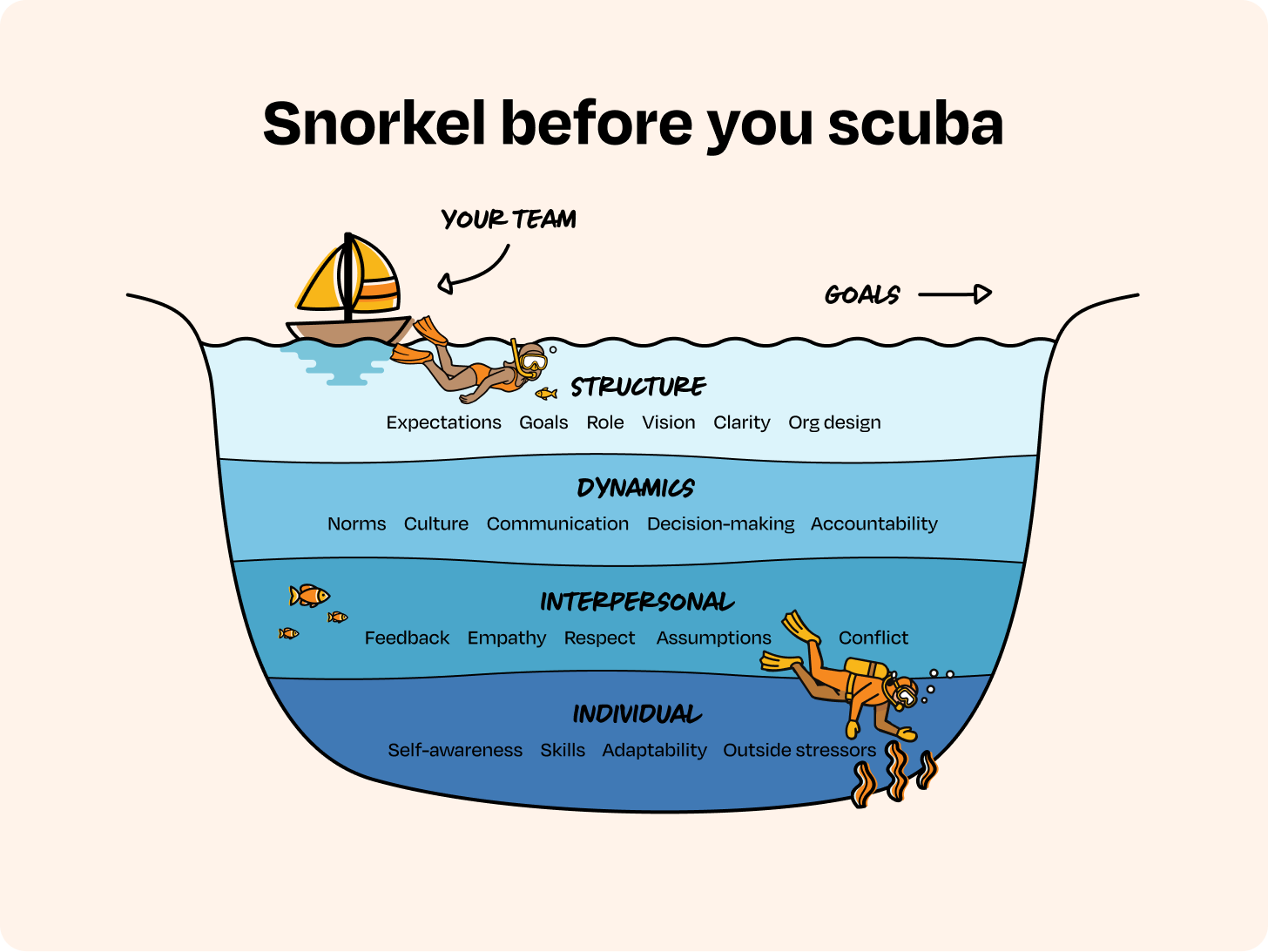
Start at the top. Always. If your team isn’t working well, here’s what the Waterline Model tells you to do:
