


Every Monday, host Claire Vo shares a 30- to 45-minute episode with a new guest demoing a practical, impactful way they’ve learned to use AI in their work or life. No pontificating—just specific and actionable advice.
Claude Code for product managers: research, writing, context libraries, custom to-do system, and more

Brought to you by:
Teresa Torres, author of Continuous Discovery Habits, shares how she uses Claude Code as a practical, everyday productivity system. She walks through how she manages tasks, automates research, and improves her writing using lightweight, markdown-based workflows instead of traditional tools and dashboards. Along the way, Teresa explains why reducing friction matters more than adding features, how organizing the right context makes AI more useful, and why she treats Claude as a partner for reviewing and refining work—not replacing it.
Detailed workflow walkthroughs from this episode:
• How I AI: Teresa Torres’s Claude Code System for Task Management, Automated Research, and ‘Lazy’ Prompting: https://www.chatprd.ai/how-i-ai/teresa-torres-claude-code-obsdian-task-management
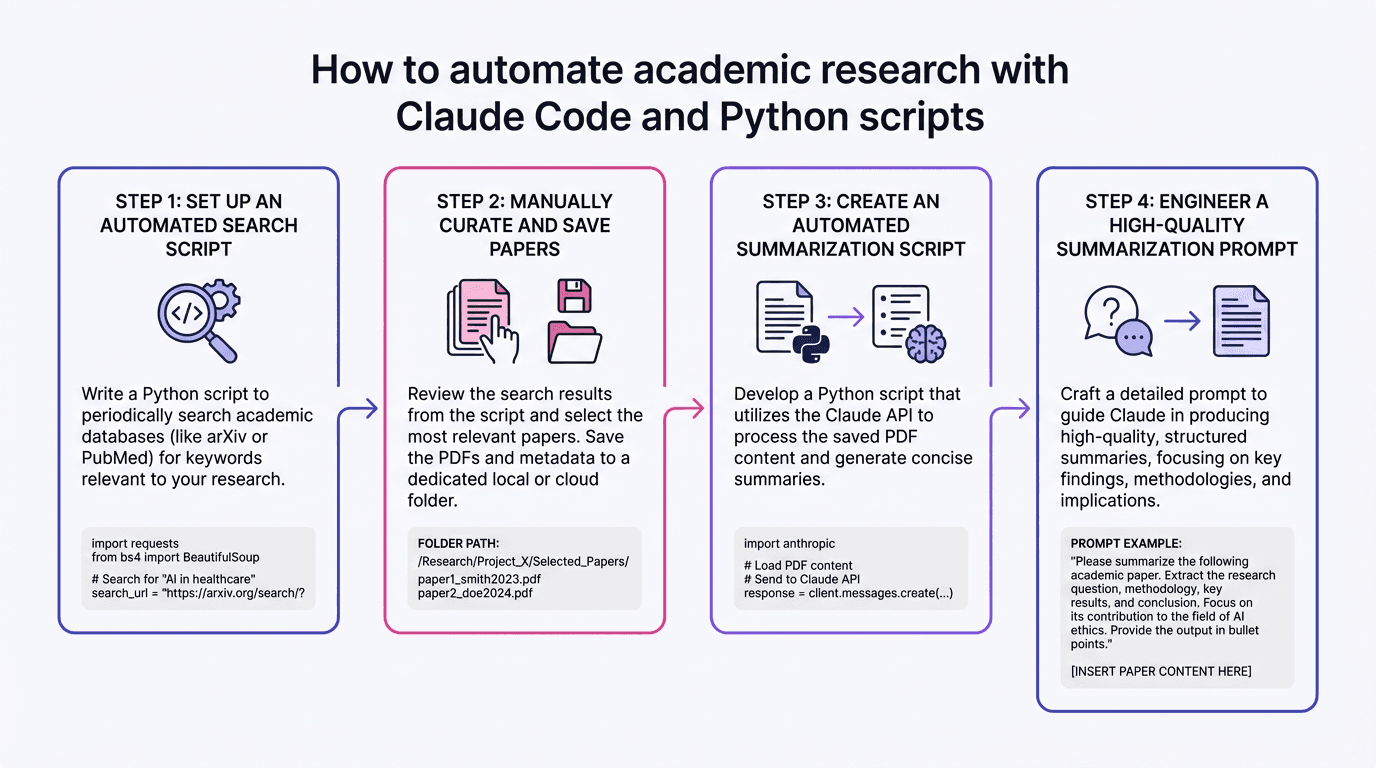
• How to Automate Academic Research with Claude Code and Python Scripts: https://www.chatprd.ai/how-i-ai/workflows/how-to-automate-academic-research-with-claude-code-and-python-scripts
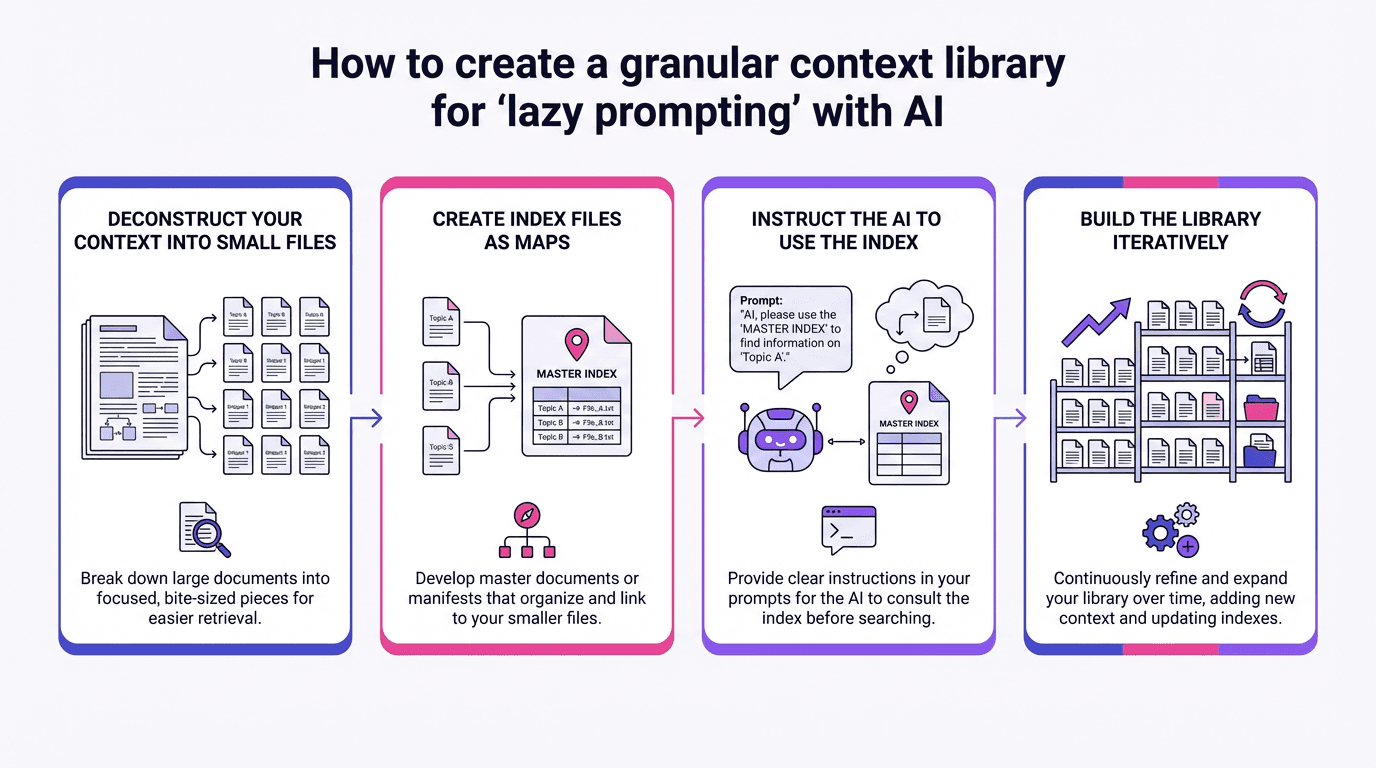
• How to Create a Granular Context Library for ‘Lazy Prompting’ with AI: https://www.chatprd.ai/how-i-ai/workflows/how-to-create-a-granular-context-library-for-lazy-prompting-with-ai
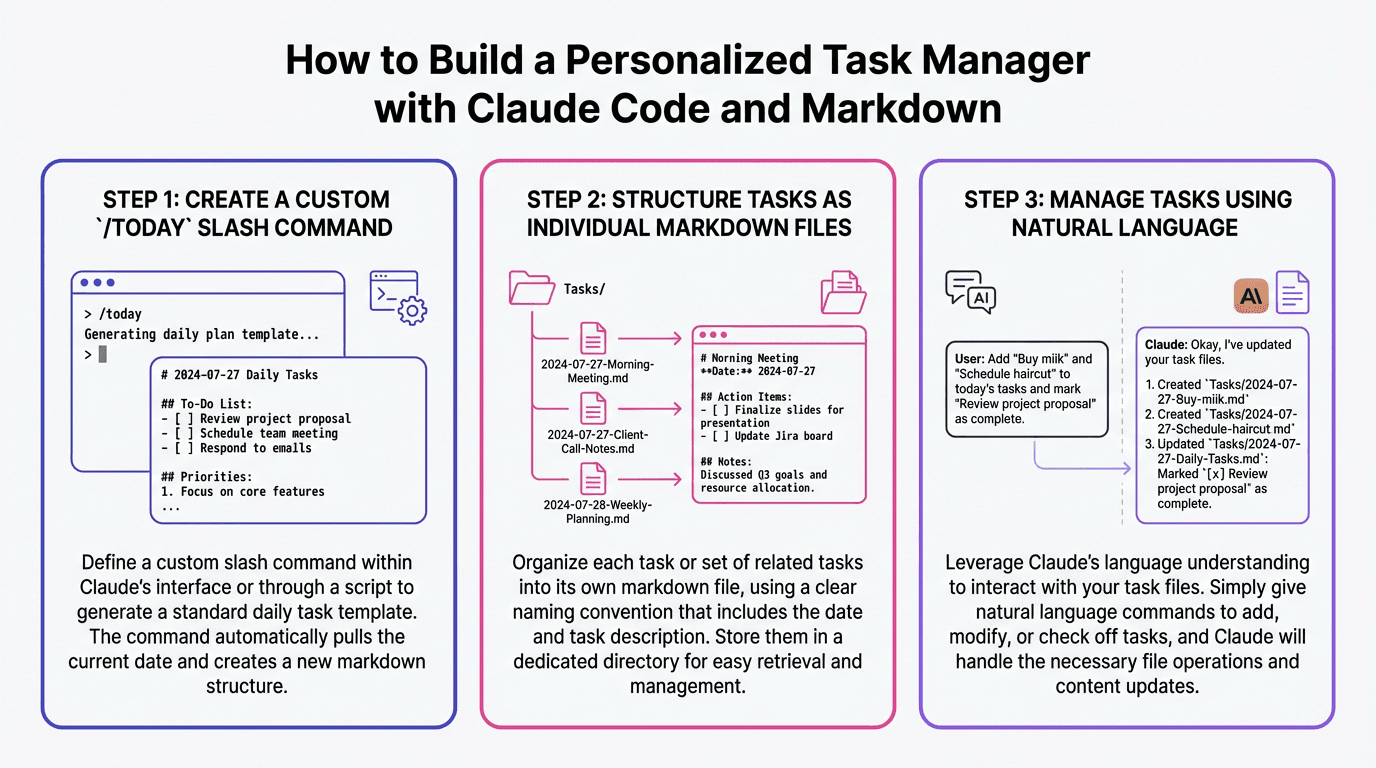
• How to Build a Personalized Task Manager with Claude Code and Markdown: https://www.chatprd.ai/how-i-ai/workflows/how-to-build-a-personalized-task-manager-with-claude-code-and-markdown
Biggest takeaways:
Speed and reduced friction are the real productivity gains. Teresa’s system eliminates the typical task management friction: “I didn’t have to open a web browser. I didn’t have to click through 14 different buttons in a GUI that is constantly changing. I didn’t have to click on a date picker and then click a label and then move it to the right list.”
AI can be your personal search engine across your knowledge base. When Teresa can’t remember where she documented something, Claude becomes her memory: “I can be like, ‘Claude, help me find this thing that I don’t know where it’s at.’” Even when she remembers details incorrectly, Claude can find what she’s looking for.
Automation works best for tasks you never make time for. Teresa’s research automation addresses a common problem: “I really want to keep up on academic research on a lot of topics, but I never have the discipline to go search for things. There’s never a moment in my day where I’m like, oh, I’m bored, I should go do this.”
Context organization is critical for effective AI assistance. Teresa learned that “if we give it too much irrelevant context, it’s still going to not be very good at its job.” Her solution was creating many small, focused context files rather than one massive reference document.
Use an index file strategy to help AI discover relevant context. Teresa maintains index files that map to specific context files: “Whenever I ask Claude to do something, it says in my global Claude MD: ‘If I ask you for help with something related to my business, use my business profile.’” This allows Claude to load only the relevant context.
Make AI document what it learns about you. Teresa builds her context library efficiently by asking, “Claude, what’d you learn today that we should document?” This creates a virtuous cycle where Claude gets better at understanding her preferences over time.
For writing, AI shines as a reviewer rather than a creator. While Teresa occasionally uses AI for specific writing tasks, she primarily relies on Claude to critique her writing based on her style guide: “Claude’s not just giving me generic feedback because I’ve written this style guide; it knows how I aspire to write.”
The “automation or augmentation” question helps clarify AI’s role. Teresa asks herself for each task, “Can Claude just do this for me? Or should Claude be helping me do this?” This reflection helps her decide what she wants to keep doing versus what she wants AI to handle.
▶️ Listen now on YouTube | Spotify | Apple Podcasts
If you’re enjoying these episodes, reply and let me know what you’d love to learn more about: AI workflows, hiring, growth, product strategy—anything.
Catch you next week,
Lenny
P.S. Want every new episode delivered the moment it drops? Hit “Follow” on your favorite podcast app.