


Every Monday, host Claire Vo shares a 30- to 45-minute episode with a new guest demoing a practical, impactful way they’ve learned to use AI in their work or life. No pontificating—just specific and actionable advice.
How to build your own AI developer tools with Claude Code | CJ Hess (Tenex)
Brought to you by:
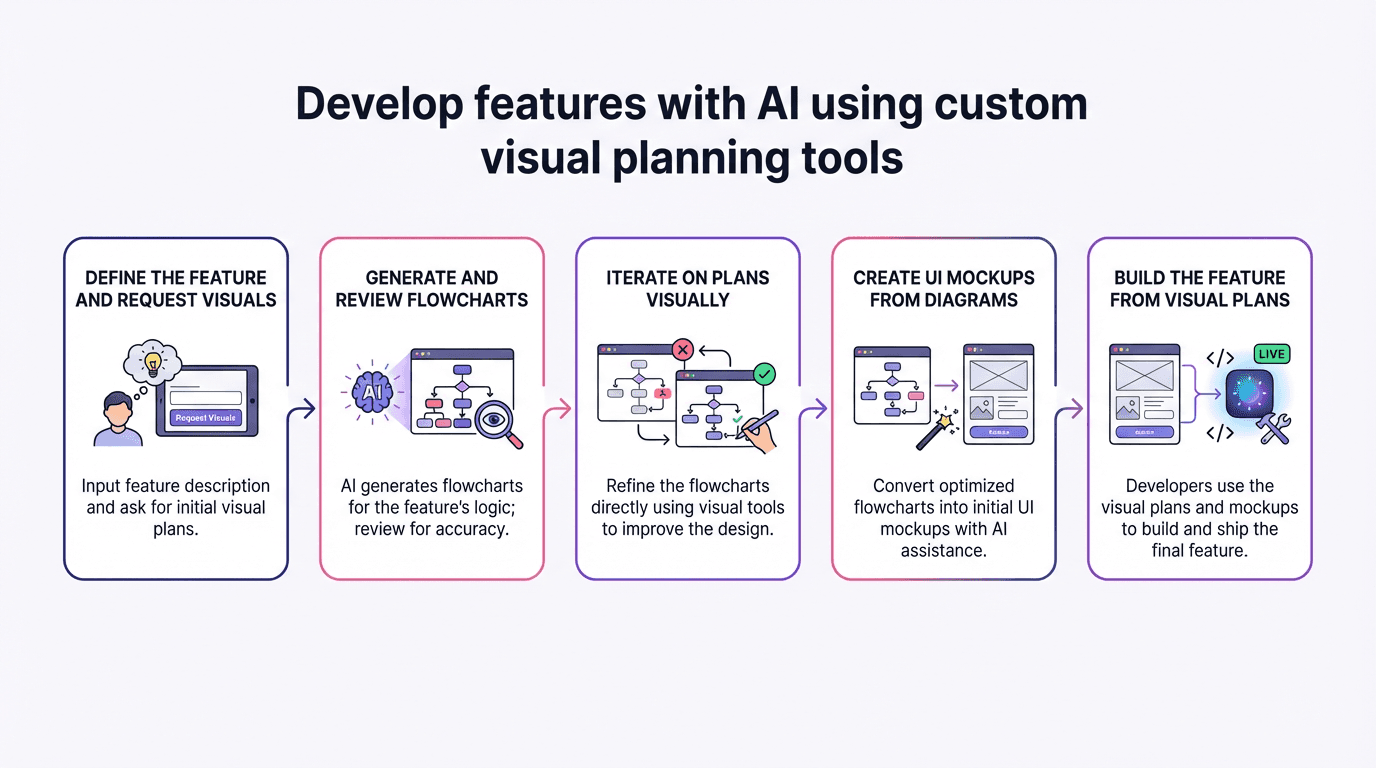
CJ Hess, an engineer at Tenex, walks through how he’s built a custom AI development workflow that lets models handle over 90% of his front-end coding. In the episode, CJ demos Flowy, a tool he built to turn Claude’s ASCII plans into interactive flowcharts and UI mockups, and explains why visual planning dramatically reduces cognitive load compared with text. He shares why he prefers Claude Code for intent-heavy work, how custom “skills” make AI tools compound over time, and why pairing Claude for generation with GPT-5.2 Codex for review produces better code than either model alone.
Detailed workflow walkthroughs from this episode:
• How I AI: CJ Hess on Building Custom Dev Tools and Model-vs-Model Code Reviews: https://www.chatprd.ai/how-i-ai/cj-hess-tenex-custom-dev-tools-and-model-vs-model-code-reviews
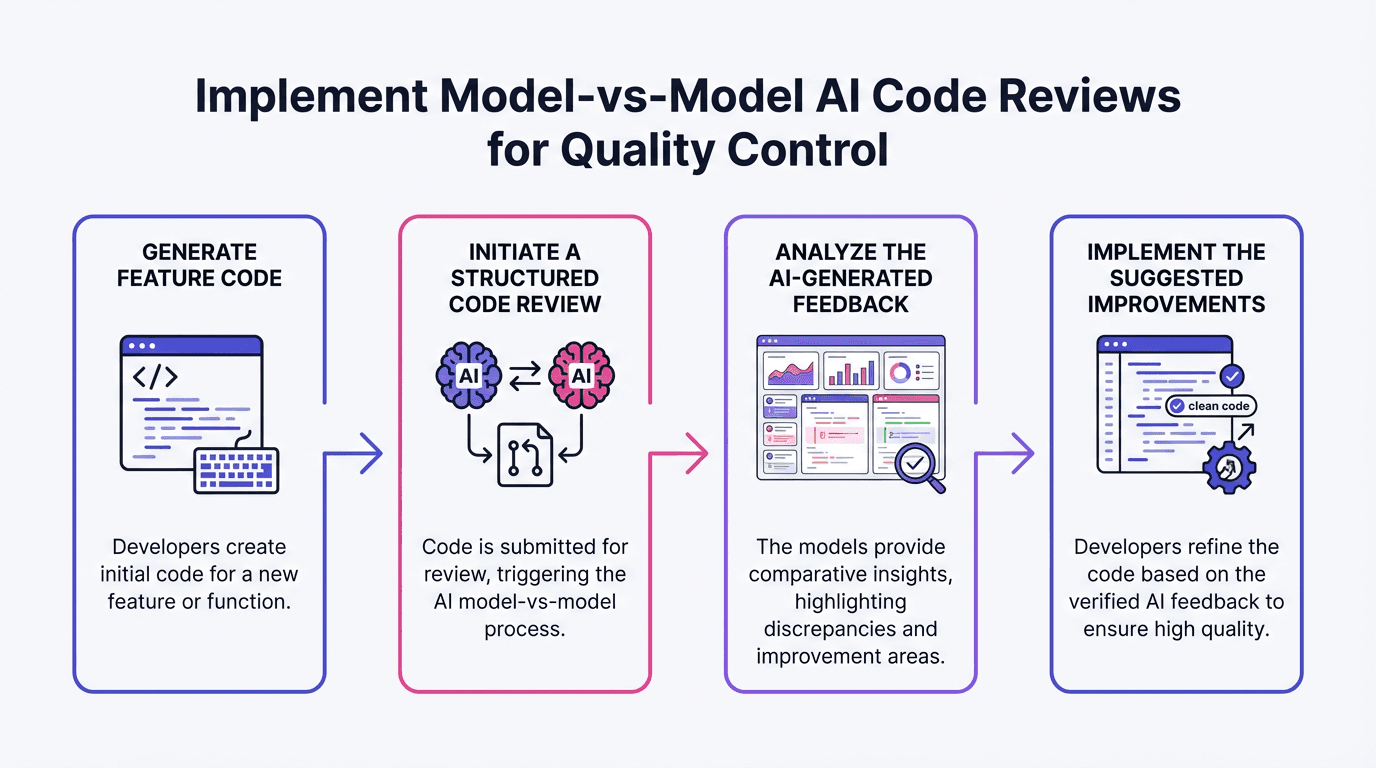
• Implement Model-vs-Model AI Code Reviews for Quality Control: https://www.chatprd.ai/how-i-ai/workflows/implement-model-vs-model-ai-code-reviews-for-quality-control
• Develop Features with AI Using Custom Visual Planning Tools: https://www.chatprd.ai/how-i-ai/workflows/develop-features-with-ai-using-custom-visual-planning-tools
Biggest takeaways:
Claude Code excels at “intent understanding” compared with other models. While CJ acknowledges that GPT-5.2 might be “smarter,” he finds Claude more “steerable” and better at understanding his intentions. This makes Claude particularly valuable for deep dives into complex coding tasks where nuanced understanding matters more than raw intelligence.
Skills are the secret to making Claude work with your custom tools. CJ created specific skills that teach Claude how to generate proper JSON for Flowy, with separate skills for flowcharts and UI mockups. These skills evolve alongside his tools, creating a continuously improving ecosystem that makes Claude more powerful for his specific needs.
Use model-to-model comparison to improve code quality. CJ uses both Claude (for generation) and Codex (for review) in his workflow. While Claude excels at building features quickly, Codex is better at identifying code smells, inconsistencies, and potential refactoring opportunities. This dual-model approach creates better code than either model could produce alone.
Visual planning reduces cognitive overhead compared with text. Even when Claude’s ASCII diagrams contain the same information as Flowy visualizations, CJ finds it much easier to evaluate and approve visual mockups. This highlights how AI tools should adapt to human cognitive preferences rather than forcing humans to adapt to AI output formats.
AI can handle more than 90% of front-end coding tasks. CJ says he “hasn’t written a single line of JavaScript or HTML in three months,” instead managing “teams of AI” to write code.
“Living dangerously” with AI permissions is increasingly viable. CJ uses an alias named “Kevin” for Claude with bypass permissions, noting that with proper Git safeguards, the risks are manageable.
▶️ Listen now on YouTube | Spotify | Apple Podcasts
If you’re enjoying these episodes, reply and let me know what you’d love to learn more about: AI workflows, hiring, growth, product strategy—anything.
Catch you next week,
Lenny
P.S. Want every new episode delivered the moment it drops? Hit “Follow” on your favorite podcast app.
Building your own developer tooling is the right direction, especially when team workflows are specific. Off-the-shelf copilots help at first, then you hit coordination pain around context, review standards, and repeatable execution. I found that custom wrappers around agent roles create far more consistency than one giant prompt.
The real unlock for me was balancing full-codebase analysis with strict action boundaries so automation stays useful without becoming chaotic. I documented the concrete setup and tradeoffs here: https://thoughts.jock.pl/p/claude-code-vs-codex-real-comparison-2026 The review loop is where most teams still underestimate complexity.